Booking open: Secure your trip early for the seasons 2026 & 2027


Khopra Danda Trek

Quick facts about Khopra Danda Trek

Duration
9 Days

Trip Grade
Moderate

Maximum Altitude
4660m

Group Size
2 to 25 People

Starts
Pokhara

Ends
Pokhara

Accomodation
Hotel

Best Time
Autumn, Spring


Trip Overview
The Khopra Danda Trekking route is a peaceful journey through the Annapurna region of Nepal. It’s a good option for those who like to see the mountains without hiking on crowded paths. The path winds through traditional villages, green forests, alpine meadows and high mountain ridges, allowing you to enjoy nature and local culture. En route, you will be hosted in warm and friendly tea houses and experience the local hospitality. The hiking trail is perfect for the first-time trekker as well as the seasoned trekker due to the beautiful scenery and quiet trail.
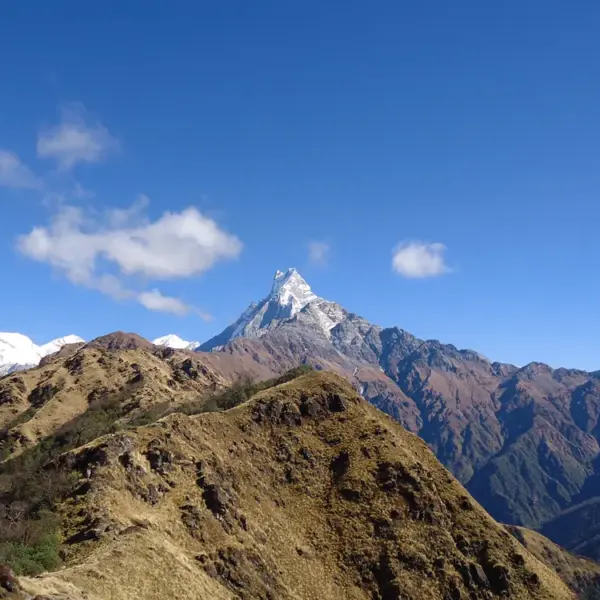
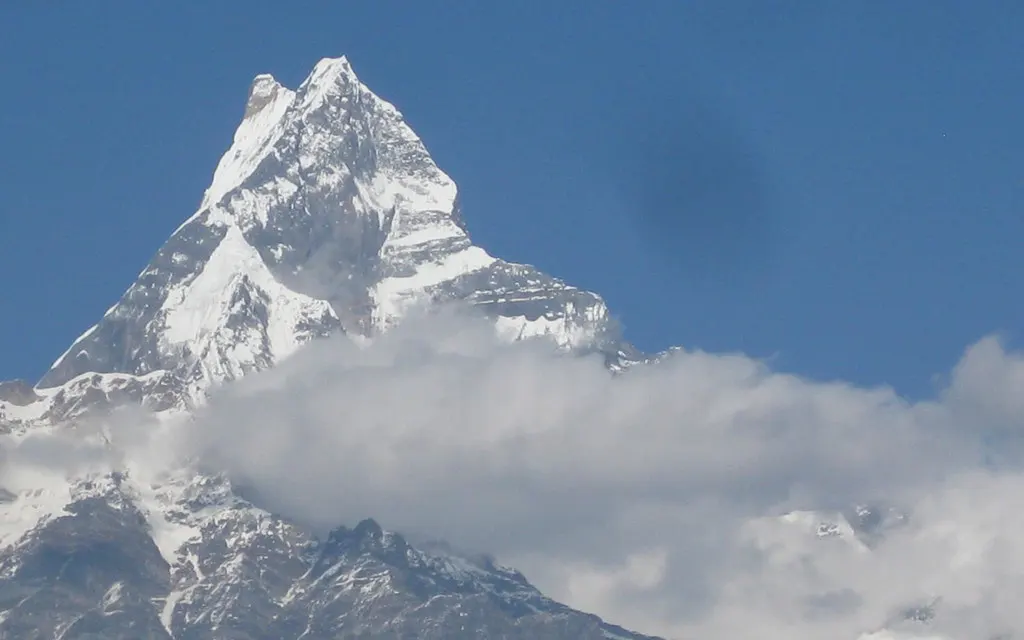
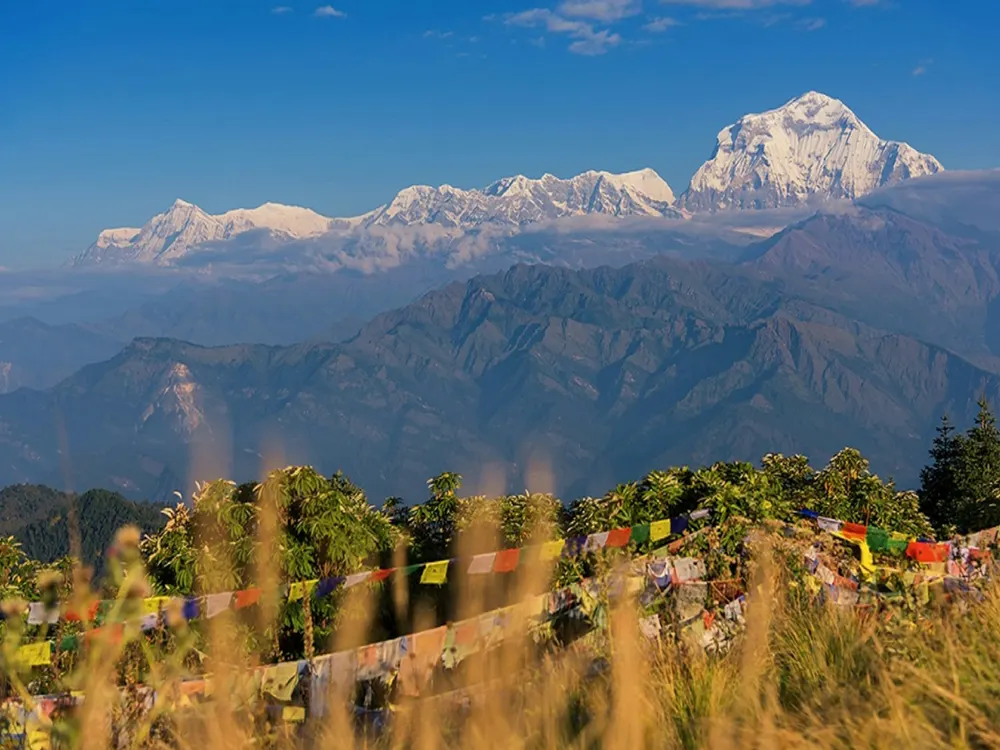
The Khopra Danda trek is a less-traveled one starting near Pokhara and, after passing through villages like Ghandruk, Tadapani, Dobato, Chistibung and Khopra Danda, leads to Talukwera village. Each day offers a different vista, whether it be terraced farmland, rhododendron forests or open ridges with amazing views of the Himalayas. The trail is also a great hike to the holy Khayer Lake (4660 m / 15289 ft), a pilgrimage site for both the Hindus and the Buddhists. The best night stay is at Khopra Danda (4,020 m / 13,189 ft), where you can see the wide panorama of Dhaulagiri, Annapurna South, Nilgiri, Machhapuchhre and other snow-covered peaks.
The Khopra Ridge Trek is moderate and is recommended for those who are fit enough. The walks are typically from 4 to 7 hours, with plenty of time for your senses to take it all in and time to rest in between. In contrast to many busy trekking routes, this trail is a quiet one to enjoy the beauty of nature without the crowds. In the spring, rhododendron blooms are colorful and in the autumn, the skies are clear and mountain visibility is great. The trek also offers a chance to experience the culture and traditions, as well as the way of living of the Gurung and Magar people who reside in the area.
This trek is a great compromise between nature, culture and stunning mountain views and is ideal for those seeking their first trip to the Himalayas or their next go-to destination within Nepal. Himalayan Idol Adventure makes it easy and fun to trek all the way from your starting point to your final destination through the careful planning of experienced guides and the dependable support of the local people.
Route Overview
The Khopra Danda trek route starts with a hilly road trip from Pokhara to Nayapul before you start on a trek to the old Gurung village of Ghandruk. Then it heads up through lovely rhododendron and oak woods to Tadapani and on to the tranquil village of Dobato. Muldai Viewpoint is a great early morning hike where you’ll see the Annapurna and Dhaulagiri ranges before heading down to Chistibung.
The journey then resumes the uphill trek to Khopra Danda (4,020 m / 13,189 ft), where one can enjoy panoramic views of the Himalayas. The best part of the trek is the sacred Khayer Lake (4660 m / 15289 ft). The route then goes back to Khopra Danda, passing through Swanta and Ghorepani. Before you’re done, make a quick trip to Poon Hill for a stunning sunrise in the early morning. This trek concludes at Nayapul and a drive back to Pokhara.
- Owner operated
- Price match guaranteed
- Tailored made trip
- Secured online payment
No. of Persons
Price per Person
-
1 -
2 people
US$ 850
-
3 -
8 people
US$ 750
-
9 + people
9999
US$ 700

Trip Highlights
- Enjoy tranquil trails, not the crowded trekking routes
- Savor breathtaking vistas of Annapurna, Dhaulagiri, Nilgiri, Machhapuchhre and Hiunchuli
- Enjoy a spectacular sunrise from Muldai Viewpoint
- Go for a hike to the holy and serene Khayer Lake (4,660 m / 15,289 ft)
- Stay overnight on the beautiful Khopra Danda ridge (4,020 m / 13,189 ft)
- Cross through the colorful rhododendron woods, alpine meadows and traditional mountain villages
- Experience the distinctive culture and friendliness among Gurung and Magar people
- Enjoy a beautiful sunrise from Poon Hill viewpoint.
- Stay in authentic village lodges, which directly benefit the villages
- See the wildlife of the Himalayas, such as Danphe, Himalayan tahr and langur monkeys in their natural habitat.

Detail Itinerary
Day 01: Drive from Pokhara to Nayapul, then Trek to Ghandruk Village
Your Khopra Danda Trek begins with a scenic drive from Pokhara to Nayapul. After breakfast, we will leave the city and will drive through small towns, small farms set in terraced fields and green hills. This drive takes approximately 1.5 hours and will lead to Nayapul, where we will start the trek. Once all permits are in order, we will start walking towards Ghandruk.
This path heads along the Modi Khola and passes through a vibrant village called Syauli Bazaar. We will cross suspension bridges, walk alongside cultivated fields and will slowly ascend the hill on stone steps. This trekking route has wonderful views of its surrounding hills and villages and is a great introduction to the Annapurna region.
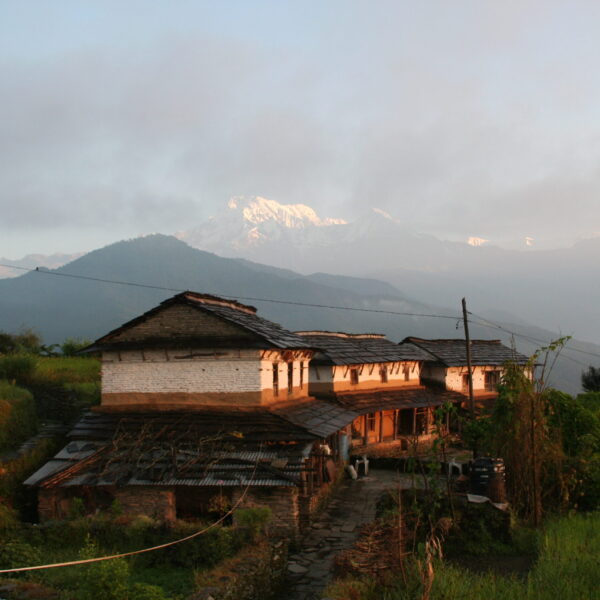
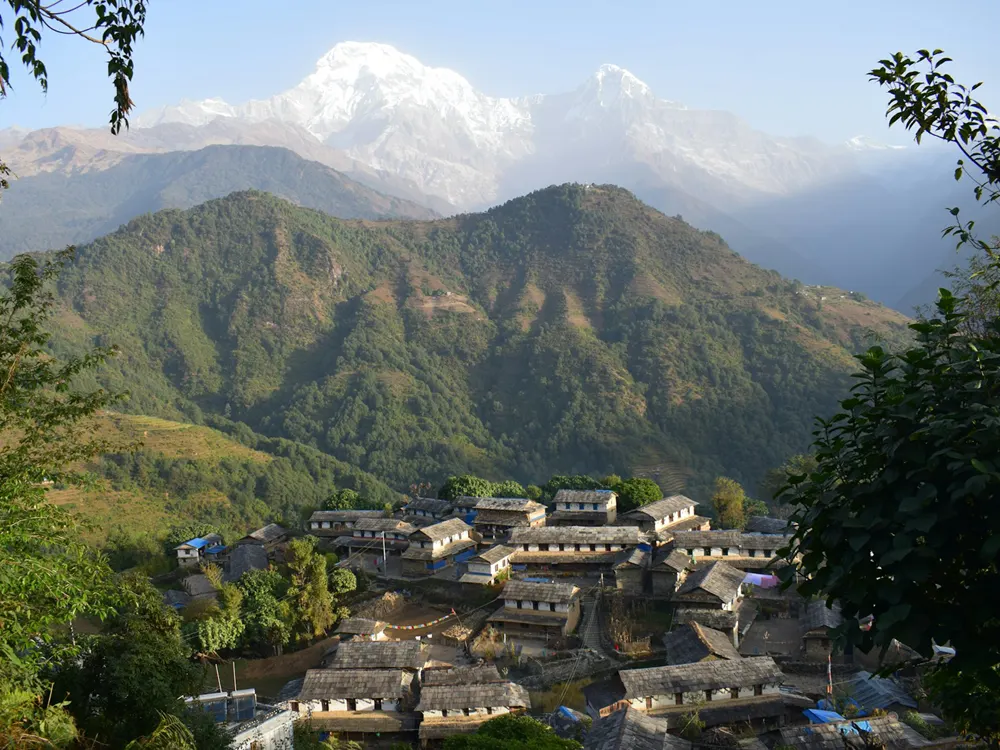
We will arrive at Ghandruk (1,960 m / 6,430 ft) by afternoon. It is a traditional Gurung village, famous for its stone houses, narrow streets and friendly people. Depending on the time, we can visit the Gurung Museum or explore the village to learn about Gurung culture and traditions. From there, on a clear day, we have views of Annapurna South, Hiunchuli, Gangapurna and Machhapuchhre before we spend the night in the local tea house.

Activity: 1.5 Hours Drive & 4 Hours Hiking

Accommodation: Hotel

Meal: Breakfast, Lunch, Dinner

Max Altitude: 1,960m/6,430ft. (Ghandruk Village)
Day 02: Trek from Ghandruk Village to Tadapani
Following breakfast, we depart Ghandruk and start our gradual ascent towards Tadapani today. The trail begins with a long stretch of stone steps and goes into a quiet rhododendron and oak woodland. The walk is even more enjoyable in the spring when the forest is blanketed with rhododendron flowers.
The forest grows denser, with moss-covered trees and small streams and waterfalls, as we head further up the hill. In the best of circumstances, we may see clusters of langur monkeys swinging through trees as well. Today’s hike is relaxing, with fresh mountain air and peaceful surroundings, while climbing steadily uphill.
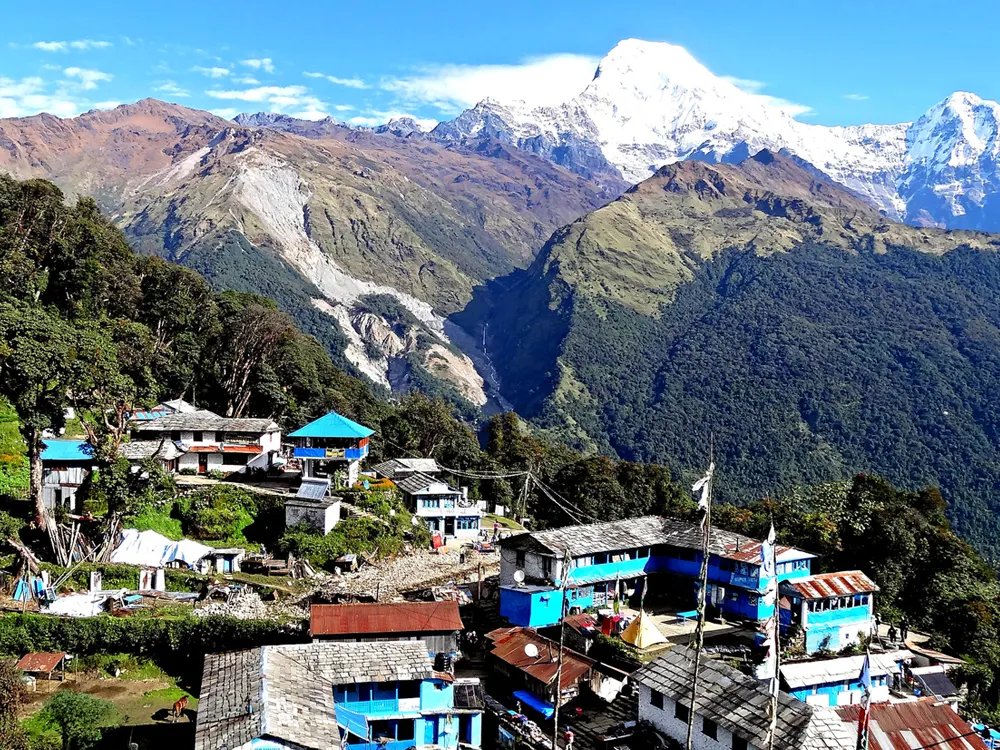
We will have a rest stop at Bhaisikharka, a well-known resting place on the trail, before a final ascent. We will reach Tadapani (2,610 m / 8,563 ft) by early afternoon. Enclosed by dense forest, this little mountaintop offers great vistas of Annapurna South, Machhapuchhre and Hiunchuli when skies are clear.
Activity: 3 to 4 Hours
Accommodation: Hotel
Meal: Breakfast, Lunch, Dinner
Max Altitude: 2,610m/8,563ft. (Tadapani)
Day 03: Trek from Tadapani to Dobato
We leave Tadapani and head for the tranquil village of Dobato. The path winds up through thick woods, where you’ll find rhododendron, oak and bamboo trees. There are a couple of short, downhill bits, but the majority of the walk is uphill as we rise in altitude throughout the day.
The trees become sparser and more open mountain vistas become visible as we continue to ascend. You can enjoy a beautiful sight of Annapurna South, Dhaulagiri, Nilgiri and many other peaks of the vicinity on clear days. It is a peaceful trail which is less crowded than many other trails in the Annapurna region and in which we can enjoy the natural environment at our own pace.
Before our last stretch of the hike, we will have lunch at Isharu. By afternoon, we will reach Dobato (3,350 m / 10,991 ft). It’s a small town with just a handful of tea houses, but it’s a convenient place to stop en route to Muldai Viewpoint. The night will be a night of rest and preparation for the early morning hike tomorrow.
Activity: 5-6 Hours Trekking
Accommodation: Lodge
Meal: Breakfast / Lunch / Dinner
Max Altitude: 3,350m/10,991ft. (Dobato )
Day 04: Visit Muldai Viewpoint and trek to Chistibung
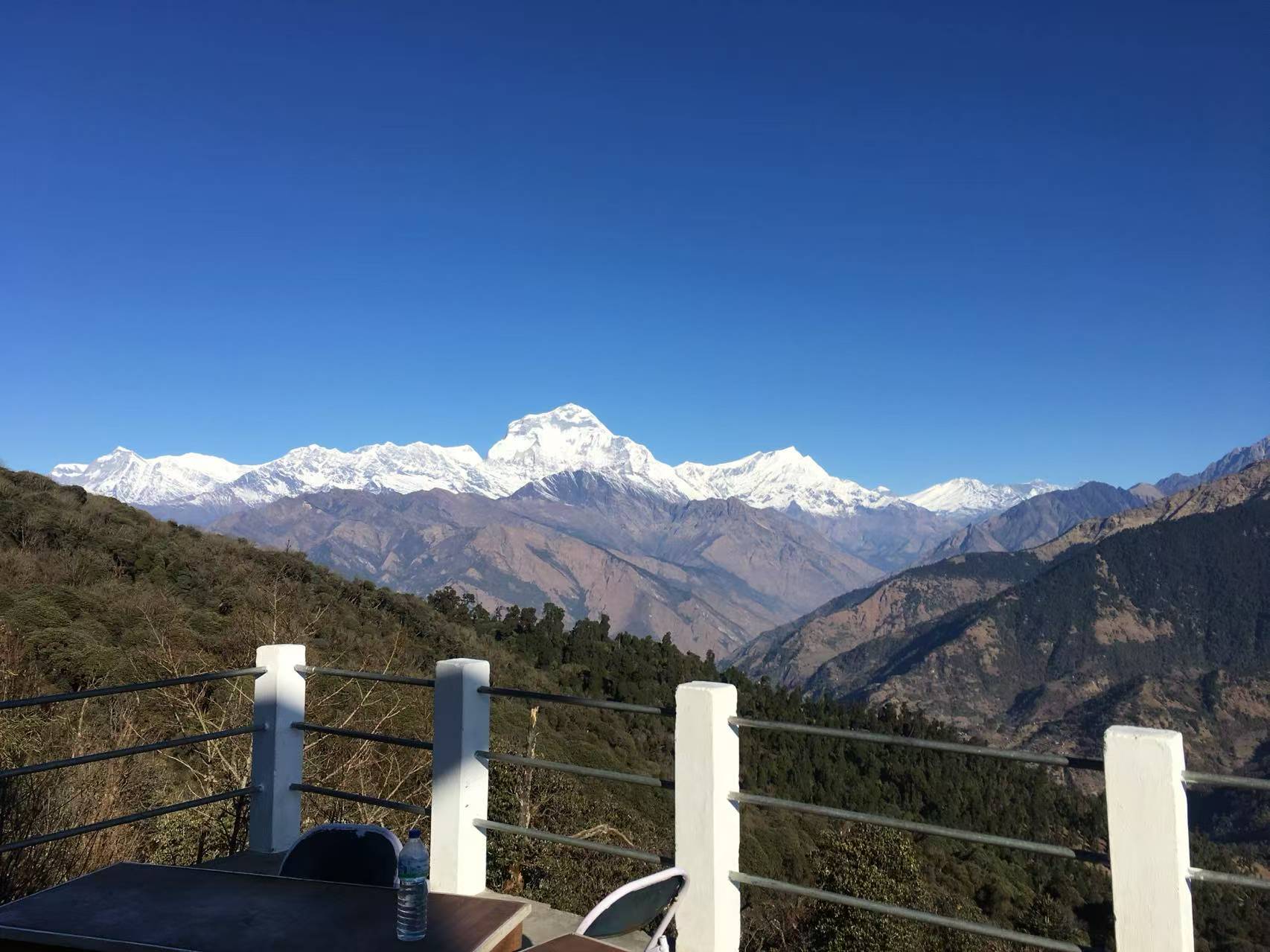
We will depart early in the morning, before sunrise and go to Muldai Viewpoint. The trail rises steadily up from Dobato and ends at the viewpoint. A long vista of the Annapurna and Dhaulagiri ranges is seen from the top. The sunrise illuminates over 25 peaks covered in snow for one of the best views of the mountain during the trek on a clear morning.
We’ll be there for a while and then go back to Dobato for breakfast. When we are prepared, we will set course for Chistibung. The approach to the trail at the start is fairly level over some quiet grazing land, Bayeli Kharka, surrounded by mountains.
The trail continues to pass through rhododendron and oak forests beyond Bayeli Kharka. We will stop at small waterfalls, streams and grazing pastures along the way before reaching Chistibung after a short but uphill climb. It’s a small place with some tea houses to stay and enjoy the peace of the mountain.
Activity: 4-5 Hours Trekking
Accommodation: Lodge / Tea House
Meal: Breakfast / Lunch / Dinner
Max Altitude: 3,637m/11,932ft. (Chistibung)
Day 05: Trek from Chistibung to Khopra Danda
We will start this steady walk uphill towards Khopra Danda after breakfast. The trail winds through the thick woods and eventually heads into the higher elevations above the forest. The area becomes more open and the views of the surrounding mountains continue to enhance with increasing altitude.
It is not a long walk; however, it will be at a slow and comfortable rate as it is a long uphill climb. As we travel, we can catch a glimpse of the Himalayan birds, including the national bird of Nepal, the Danphe and also see Himalayan tahr grazing on the hillsides. This peaceful trail is less crowded when compared with many popular trekking routes in the Annapurna region.
By lunchtime, we will arrive at Khopra Danda, located at 4,020 m (13,189 ft). The ridge provides excellent vistas to Dhaulagiri, Annapurna South, Nilgiri, Bahrasikhar and other Himalayan summits. We now check into the community lodge, settle down and enjoy the lovely scenery of the mountains before heading out on tomorrow’s hike to Khayer Lake.
Activity: 3-4 Hours
Accommodation: Lodge / Tea House
Meal: Breakfast / Lunch / Dinner
Max Altitude: 4,020m/13,189ft. (Khopra Danda )
Day 06: Hike to Khayer Lake and Return to Khopra Danda
Today is the best and one of the most rewarding days of the Khopra Danda Trek. We will leave early in the morning and head for the sacred Khayer Lake on foot. The track leads up through open alpine terrain with fine views of the surrounding peaks of the Himalayas. Due to the elevation, we will take frequent breaks and walk slowly.
Khayer Lake is at 4,660 m (15,289 ft) and is a significant pilgrimage place for both Hindus and Buddhists. Some festivals are held here where the locals come and do religious activities. The peaceful lake is surrounded by rugged mountains, making it a memorable place to visit.
After spending some time at the lake, we will retrace our steps back to Khopra Danda. You can see up close Dhaulagiri, Annapurna South, Nilgiri, Tukuche Peak and Dhampus Peak during the return hike. After returning to the Lodge, we can rest and enjoy another evening amidst the beautiful Himalayan landscape.
Activity: 7 to 8 Hours Hike
Accommodation: Lodge / Tea House
Meal: Breakfast / Lunch / Dinner
Max Altitude: 4,660m/15,289ft. (Khayer Lake )
Day 07: Trek from Khopra Danda to Swanta
After breakfast, we will set off towards the traditional village of Swanta with a descent down Khopra Danda. The path winds through open terrain of hillsides, into stunning oak and rhododendron woodland. The majority of the walk today is downhill, though there are a couple of short sections uphill en route.
We will cross over a small mountain pass and pass through the villages of Chitre and Ghara. The tranquil path crosses several streams, small temples and wooded paths where many birds and other wildlife can be found. As we descend, the air will get warmer and the greenery will become greener.
By afternoon, we will arrive at Swanta, located at 2,271 m (7,451 ft). This tranquil village of the Magar community is an opportunity to learn the local culture and everyday mountain life. We have the opportunity to visit a local school and/or have some time for local people if time permits. On the way, we will spend the night in a comfortable tea house and enjoy another quiet evening in the Annapurna region.
Activity: 5 Hours Trekking
Accommodation: Lodge
Meal: Breakfast / Lunch / Dinner
Max Altitude: 4,020m/13,189ft. (Swanta)
Day 08: From Swanta trek back to Ghorepani
Today we will head out of Swanta and head along the trail to Ghorepani. The walk is through forests, terraced fields and small villages, including steep climbs and descents. Crossing streams and enjoying the peaceful ambiance, we will head towards one of the most popular villages in the Annapurna region.
We will meet the main trekking trail after approximately an hour’s walk, where we will connect to the trekking route from Ghorepani to Poon Hill. From here we will meet with other trekkers on the Annapurna trekking trails. We will have a lunch stop in Banthanti before making our way slowly up through rhododendron and oak forests.
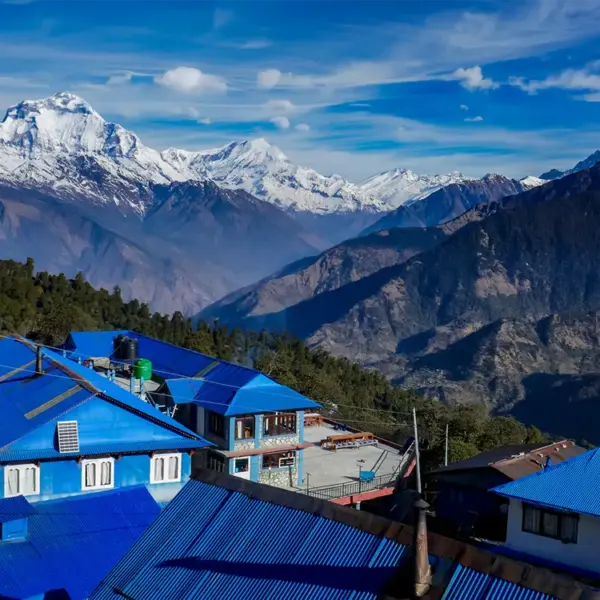
By afternoon, we will reach Ghorepani (2,834 m / 9,298 ft). The village is famous for its traditional tea houses and the beautiful scenery in the mountains. With clear skies, we can see Annapurna South, Dhaulagiri, Nilgiri and the surrounding hills overlooking before getting ready for an early morning trek to Poon Hill tomorrow.
Activity: 4-6 Hours Trekking
Accommodation: Lodge / Tea House
Meal: Breakfast / Lunch / Dinner
Max Altitude: 2,834m/9,298ft. (Ghorepani )
Day 09: From Ghorepani trek back to Nayapul then drive to Pokhara
Early this morning, we will get up for a hike to the most popular viewpoint in the Annapurna region, Poon Hill. The walk up the hill is about an hour until you reach Poon Hill (3,210 m / 10,531 ft) before sunrise. The day will bring to light beautiful sights of Dhaulagiri, Annapurna I, Annapurna South, Hiunchuli, Machhapuchhre and snow-capped peaks among others in the Himalayas.
Following a time spent at the viewpoint, we will head back to Ghorepani for breakfast. Then, we’ll start the long journey down to Nayapul, through forests, villages, terraced farmland and suspension bridges. The trail is also a last chance to experience the natural beauty and culture of the Annapurna region.
We will drive back from Nayapul to Pokhara and here the trek ends. Once you’ve checked in at the hotel, you can rest or spend an evening exploring the lakeside and celebrating the successful end of your journey.
Activity: 6 to 8 Hours Trekking and Driving
Accommodation: Hotel
Meal: Breakfast / Lunch/ Dinner
Max Altitude: 3,210m/10,531ft. (Pokhara )
If our standard itinerary doesn't fully meet your needs, we are happy to tailor it to your specific preferences and requirements.
Trip Information of Khopra Danda Trek
How Difficult Is the Trek?
The Khopra Danda Trekking route is a moderate trek. It can be done by people with moderate fitness who can walk several hours per day. The days spent trekking are typically 4-7 hours spent walking on stone steps, forest trails and mountain paths. While experience trekking is useful, it’s not a must as long as you are prepared before you depart.
It is not the terrain that is a problem; it is the altitude. The highest point on the way is Khayer Lake (4,660 m / 15,289 ft) and the highest overnight stay is at Khopra Danda (4,020 m / 13,189 ft). The air gets thinner at higher altitudes, which can make going uphill more difficult. Walking at a steady pace, drinking water and following proper acclimatization procedures makes the trek safer and more enjoyable.
The Khopra Danda Trek is a quieter trek than others in the Annapurna region. The path goes through forests, through traditional villages, through alpine meadows and high ridges, with some gentle and some challenging grades. Some days are longer with longer climbs and some days are easier with more downhill walking. The hilly road keeps the trek interesting all the way.
Himalayan Idol Adventure’s experienced guides help manage your pacing, check your health and give you support during the trek. A lot of healthy trekkers undertake this trek successfully with proper preparation, suitable equipment and a positive attitude and enjoy the beautiful Himalayan scenery.
Best Time to Do This Trek: Month-by-Month Visibility & Weather Guide
Spring season (March to May) and autumn season (September to November) are the best seasons to undertake the Khopra Ridge Trek. These months have a fairly even temperature range, frequent clear skies and good mountain visibility. In this climate, trekking is safer and you can enjoy panoramic views from Khopra Danda (4020m/13189ft) and Khayer Lake (4660m/15289ft).
March means better weather and flowers for the rhododendron forests. April is a beautiful month with lots of color, mild weather and great mountain views. May is a bit warmer, but mornings are mostly clear with afternoon cloud formation. These months are very popular due to the good weather and the scenic beauty.
Khopra Danda Trekking is thrilling in autumn too. The end of the monsoon in September means that the hills are fresh and green. October is typically the clearest month of the year and is the most popular time to trek. November is cool, dry and offers excellent visibility, with mornings and evenings getting chillier at higher altitudes.
Winter (December-January-February) is cold and has snow in higher elevations. Heavy snow can make trails near Khayer Lake difficult. The summer monsoon occurs during June, July and August and this is the time when rainfall is most common, the trails are slippery, leeches are plentiful in the forest and mountain viewing is limited. Trekking is possible, yet spring and autumn are the best and more dependable seasons to take this trip.
Transportation, Food and Accommodation
The Khopra Danda trek starts with a vehicle from Pokhara to Nayapul by vehicle, which takes approximately an hour and a half. You will then head back to Pokhara from Nayapul by private vehicle after the trek. Private transport is used in most trips since it is more comfortable and time-saving. Road conditions between Pokhara and the starting point of the trek are relatively good, allowing for smooth and convenient travel.
All travel is by walking on the trek. Every day, you will walk through forests, traditional villages, terraced fields and alpine landscapes. The trail then slowly heads to Khopra Danda (4,020 m / 13,189 ft) and then passes through some other villages. They use porters or pack animals to transport goods to tea houses along most parts of the trail where there are no roads.
At Khopra Danda Trekking, you will stay overnight at local tea houses and community lodges. Rooms are basic but nice, typically featuring twin beds, blankets and shared bathrooms. Along the Khopra trail, there are community lodges that provide services in the villages for tourists and trekkers.
Freshly prepared meals are served at the tea houses. Eggs, porridge, Tibetan bread, pancakes or toast are typically served for breakfast. An average meal is likely to be dal bhat, fried rice, noodles, pasta, soups, momos, potatoes or seasonal vegetables. Himalayan Idol Adventure takes care of your accommodation and meals along the way, so that you can focus on enjoying your trip.
Altitude Sickness
The amount of oxygen in the air gradually decreases as one ascends through the Khopra Ridge Trek. Above 2,500 m (8,202 ft), some trekkers might suffer from altitude sickness. The highest overnight stop is Khopra Danda (4,020 m / 13,189 ft), while the highest point is Khayer Lake (4,660 m / 15,289 ft). While many will walk the journey fine, all people will respond to high altitude in their own way.
Common symptoms are headache, loss of appetite, tiredness, dizziness, nausea and a lack of sleep. Such indications must never be ignored. As symptoms continue to worsen, serious altitude-related illnesses can occur, which require prompt medical intervention if continued to climb.
The Khopara Danda Trek route has a gradual ascent, thus giving your body time to acclimatize. Slow pace, water, meals and abstaining from alcohol are helpful measures to take to minimize the chances of developing AMS. Many trekkers also prefer to go at a consistent speed and not push themselves up a hill.
Himalayan Idol Adventure guides are experienced and know how to keep track of the trekkers and are aware of the initial symptoms of altitude sickness. They will advise rest, move to a lower level or ensure emergency assistance, if needed. The safest way to stay safe at high altitude is to follow your guide’s instructions.
Fitness & Training Plan for the Trek
A good condition of the body helps to make the Khopra Danda Trekking experience enjoyable and less tiring. The walk is not a technical one, but will involve several hours walking daily on rough mountain terrain. You should train your body for the trip to make you stronger and more confident.
Start training at least 6 to 8 weeks before travel. Do activities like brisk walking, hiking, jogging, cycling, swimming or climbing stairs. Aim to run 4-5 times per week and gradually build up your running time. Small backpacks are particularly useful when doing weekend hikes, as this is most similar to trekking conditions.
There are numerous uphill sections and downhill sections along the Khopra Ridge Trek as well as stone stairs. Leg, core and lower back strengthening exercises aid in balance and decrease fatigue. A simple stretch or yoga also offers flexibility and adds to the prevention of muscle pain after long walking days.
Just like physical fitness, mental fitness is also essential. Weather on a mountain can be unpredictable and challenging some days more than others. It is important to have a positive mindset, regular training, adequate trekking equipment and rest before your trip for you to enjoy every step of the adventure.
Visa and Permits and Necessary Documents
Nepal tourist visa is required to be issued by the Nepal Government to most of the international visitors to undertake Khopra Danda Trekking. It is possible to get a tourist visa before arrival in the country through an embassy or at the Kathmandu Tribhuvan International Airport. Your passport must have at least 6 months’ validity and must have sufficient blank spaces for visa stamping.
In this trekking area, 2 permits are required to get in. These are the Annapurna Conservation Area Permit (ACAP) and Trekkers’ Information Management System Card (TIMS). The permits help to regulate trekking operations, fund conservation initiatives and ensure the safety of trekkers. As always, the original permits must be carried and will be inspected at various points on the trail.
Several travel documents are essential for the Khopra Danda Trek. Printed and photocopied passport, visa, travel insurance policy, flight details, passport-size photos and emergency contact details are recommended. If these documents are kept in a waterproof pouch, it will protect them during the trek.
If you wish to book a tour with Himalayan Idol Adventure, they can also arrange all of the necessary permits for your trip. You will be able to start on your journey without worrying about paperwork and ensure that all paperwork is prepared correctly.
Health & Safety on the Trek: Emergency Support and Evacuation
The Khopra Ridge Trek is always about safety first. While the trail is well-traveled, weather, elevation and/or unforeseen health issues can change in an instant. The thing to do is to take your time for the journey, take your time to drink plenty of water and follow your guide’s directions.
The route climbs to Khopra Danda (4,020 m / 13,189 ft) and reaches Khayer Lake (4,660 m / 15,289 ft). Some trekkers at these elevations will suffer from altitude-related illness. Guides continually monitor all trekkers’ well-being and modify the route as necessary if someone exhibits signs of needing additional rest or descent.
Health posts have been established at a basic level in some lower villages of the Khopra Danda Trekking route, but as you get higher into the trek, medical facilities become greatly limited. In the event of serious illness or injury, helicopter evacuation is the quickest and safest form of evacuation. Before going on the trek, it is therefore highly recommended that you have good travel insurance, which includes emergency helicopter rescue.
Himalayan Idol Adventure guides are professionals who carry a first aid kit, keep an eye on the weather and arrange rescue if needed. They have first-hand knowledge that decreases risks and allows for making the appropriate decisions if there is an unexpected situation.
Mobile Network, Internet & Charging Facilities Along the Trail
Communication facilities are available on the Khopra Danda Trek, but they become less available in the higher elevations. For the most part, it is possible to get better coverage from Nepal Telecom (NTC) in many villages and also in some of the lower parts of the route, Ncell can be found. Service is not guaranteed the entire way and will be affected by location and weather.
Many tea houses offer internet access, but it is often slow and will require extra payment, which is usually less than city Internet access. Satellite and wireless networks are used in higher villages and may not be available in bad weather. It is advisable to download offline maps and travel-related information before leaving Pokhara.
Along the Khopra Danda Trekking route, you can also find charging points at most of the tea houses. Many villages have electricity, but to charge electronic items, one has to pay a small sum of money. Having a power bank on hand is very useful as electricity can sometimes be unavailable.
Mobile and internet connectivity and charging facilities are enhanced at lower altitudes of the villages and diminish at higher elevations like Khopra Danda (4020m/13189ft). You can look forward to staying connected while enjoying the quiet mountain atmosphere.
Travel Insurance
Travel insurance is an essential part of planning the Khopra Danda Trekking adventure. Before arriving in Nepal, make sure your policy covers trekking at high altitude. The trek reaches its highest point at Khayer Lake (4,660 m / 15,289 ft), so you should make sure that the insurance covers trekking above 4,660 m (13,123 ft). Carefully reading the policy before travelling can help to prevent issues arising later.
Emergency helicopter evacuation, medical treatment, hospitalization and emergency transportation should be covered. Also, the policy will have to include trip cancellation, trip interruption, lost baggage, delayed flights and personal belongings. These benefits can help save unexpected costs if you have to change your travel plans due to weather or other unforeseen events.
The Khopra Ridge Trek is a trek that goes to remote mountain areas where medical facilities are limited. Helicopter evacuation may be the most rapid method of getting to a hospital if a serious illness, injury or severe altitude sickness occurs. Rescue and medical expenses may be extremely costly if you are not insured.
When you are preparing to go on your trek, make sure to have insurance policies, emergency contact numbers and insurance policy information both in print and on hand. If you do need help from the outside, they’ll get it to you sooner if you share this information with your guide.
Language & Communication
The Khopra Danda trek goes through the traditional villages where people are known for their warm hospitality. The language of Nepal is Nepali and Gurung and Magar are common in many villages of this trekking route. Local languages are different in each community, but everyone is treated with respect and kindness.
Most tea houses and lodges have basic English speakers. Restaurants and food vendors, as well as guides, porters and lodge owners who have worked with international tourists regularly, will generally be able to speak English well. Knowing basic greetings like “Namaste” and “Dhanyabad” will make a difference to the locals and enhance the pleasant trek experience.
During the Khopra Danda Trekking, you will have numerous chances to learn about the local traditions and village life. Saying polite things, respecting the local culture and customs and showing interest in the culture often result in meaningful conversations with local families. Communication is easy even if language barriers are present, through smiles and simple gestures.
With Himalayan Idol Adventure, your experienced guide will assist you with translation when necessary. This makes it easier to communicate with local communities, get a better understanding of cultural traditions and have a smoother trekking experience throughout.
Useful Tips for the First-Time Travellers
Is the Trek Suitable for Kids and Teenagers? An Honest Age Guide
Yes, it is a trek suitable for teenagers, according to their fitness level and hiking experience. The lengthy days on foot and high altitudes can be a challenge for younger children. Families should select a less rushed trip, allowing sufficient acclimatization. Parents should also take into consideration each child’s physical ability to join the trek, their health and past trekking experience.
Is This Trek for Seniors? What to Expect at 60+
This trek is completed by many healthy elderly seniors every year. Regular walking before the journey and good physical fitness are of greater importance than age. It is enjoyable because of a comfortable pace, acclimatisation and regular rest. If you have any medical conditions, please check with your doctor before traveling.
First Himalayan Trek Ever? Why This Trek Is Ideal for You
It’s an appropriate trek for people who are active and willing to do moderate treks. There are pleasant tea houses along the trail, the paths are well marked and the climb is not too steep. It is a rewarding experience for people who don’t need technical climbing or mountaineering skills to enjoy beautiful mountain views and traditional villages and fewer crowds.
Can You Do This Without a Guide? Is It Legal and Is It Wise?
For most of the treks in Nepal, including the Khopra Danda Trek, a guide is required. In areas where regulations permit trekking without the use of a guide, hiring one is highly recommended. Guides will make travel safe, assist with navigating the backcountry, help with booking accommodations and give useful local knowledge, particularly in the mountain country.
How Crowded Is This Trek?
This trek is much quieter than the very popular treks such as the Everest Base Camp trek or the Annapurna Base Camp trek. Some trekkers may be encountered during the main seasons, but the trails are quiet. The spring and autumn seasons are more crowded than the winter and monsoon seasons.
Solo Female Trekkers on This Trek: Safety and Practical Notes
This trek is done safely by many solo female trekkers annually. The local people are hospitable and there are comfortable tea houses. For first-time visitors to Nepal, trekking with a licensed guide is an added safety measure as well as the provision of local support and peace of mind.
Best Photography Spots on the Trail
Ghandruk, Tadapani, Muldai Viewpoint, Khopra Danda, Khayer Lake and Poon Hill are the best spots for photography during Khopra Danda Trekking. The best views of the mountains are early in the morning and at dusk. The trek provides great photo opportunities in the Rhododendron forests in spring, the traditional villages, the alpine meadows and the panoramic views of Annapurna and Dhaulagiri.

Frequently Asked Questions
Groups typically have between 2 and 10 trekkers, which offers a pleasant pace, individual attention and a better trekking experience.
Most tea houses will provide hot showers for an extra fee. This can be affected by the village or its water supply and by the weather.
Drinking water in tea houses is available as bottled and boiled water. It is recommended to bring a reusable bottle and water purification tablets.
Himalayan tahr, langur monkeys, Danphe, eagles and many other mountain birds can be spotted throughout the forests and alpine meadows.
There are electricity facilities for lighting and charging devices in most tea houses. During poor weather conditions or high demand, the supply of power may be restricted.
Yes, most tea houses can make vegetarian meals; many can also make vegan meals if notified before the meal is prepared.
The 25- to 35-liter capacity of the comfortable daypack is perfect for carrying water, snacks, clothes and the essentials for a day’s travel on the trek.
No, there are no ATMs along the path to the trekking area that are reliable. Take out the required amount of Nepalese money in Pokhara before going on the trek.
Yes, most of the tea houses have electrical outlets for camera/phone charging and they’ll typically charge a little extra for it.
Certainly, the itinerary can be made as long as Annapurna Base Camp, Ghorepani Poon Hill or the Annapurna Circuit and so on, can be included as per the available time.
- Owner operated
- Price match guaranteed
- Tailored made trip
- Secured online payment
No. of Persons
Price per Person
-
1 -
2 people
US$ 850
-
3 -
8 people
US$ 750
-
9 + people
9999
US$ 700
 Testimonial
Trip Reviews
 You May Also Like