


Booking open: Secure your trip early for the seasons 2026 & 2027
Manaslu Circuit Trek Accommodation Guide: Tea Houses, Food & Facilities
15 July 2026
By admin

Planning where you will sleep and what you will eat is just as important as preparing for the trails. For many trekkers, the beautiful views and distances walked on a day-to-day basis are the main attractions, but lodging and meals are significant factors in making the trip comfortable and enjoyable. Knowing what you’re in for when you pack will help you to budget, know your packing list and not be taken by surprise on the way.
This Manaslu Circuit Trek Accommodation Guide provides all the information you need to know about the tea houses, meals, dining options, washrooms, charging facilities, internet and other services you will be provided with while you are on the trek. The facilities are not as developed as in Nepal’s more popular trekking areas and in higher villages are more basic, as the Manaslu region is less developed. Despite this, local tea houses are welcoming and offer all a trekker requires for a successful journey.
From your first time exploring the Himalayas to the decision of which trekking route to do over the Manaslu Circuit, this guide will help you to understand the level of comfort you can expect each day.
Understanding Accommodation on the Manaslu Circuit
The first thing to note in the Manaslu Circuit Trek Accommodation Guide is that. Almost all nighttime accommodations on the trail are in traditional tea houses. Most parts of the trek are not accompanied by big hotels or resorts, unlike luxury trekking routes.
Recommended Trip
Planning where you will sleep and what you will eat is just as important as preparing for the trails. For many trekkers, the beautiful views and distances walked on a day-to-day basis are the main…
 12 Days
Family-run tea houses are lodges constructed to accommodate trekking and climbing visitors. They offer a bed to sleep in, freshly prepared food and a common dining room where people sit up in the evening. The majority of these lodges have been in operation for years and some have been upgraded with modern amenities due to the development of trekking in the area.
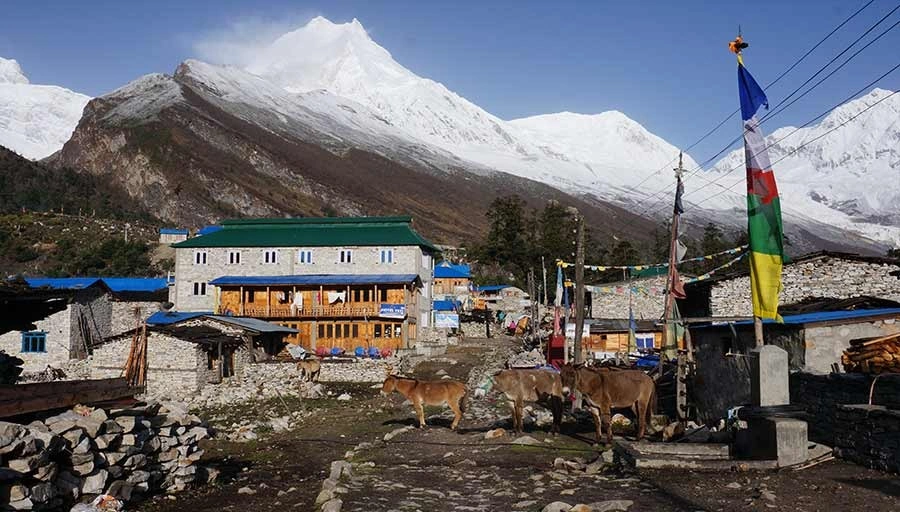
Village by village, the standards of the accommodation differ. Typically, lower villages will be larger, have better electricity and more private rooms. The farther it is up in elevation, the simpler the rooms and services are. To prepare for your hike, it’s important to have a realistic sense of what to expect by understanding these differences.
What Tea House Rooms Are Like
The majority of tea houses in the Manaslu area offer rooms on a twin-sharing basis with two single beds, mattresses, pillows and blankets. Rooms are, in general, simple and are intended to be slept in after an extended day of walking, not for a long time spent indoors.
The walls are typically constructed of wood or stone and insulation is minimal. At night, rooms are quite cold during the colder months. Although blankets are available, a warm sleeping bag is strongly recommended.
The rooms are uncluttered with furniture in them. They typically have a view of the mountains or villages and feature two beds, small tables and hooks for hanging clothes, as well as a window. Bathrooms are rarely attached to rooms outside the lower villages and in the higher areas, attached bathrooms are even rarer.
In remote villages, there is not enough space for tents, so during the busier seasons of the trekking season, you will share rooms with other trekkers. It is easier to book up through a trekking agency or early in the afternoon.
Accommodation Quality by Elevation
One of the helpful aspects of this Manaslu Circuit Trek Accommodation Guide is knowing how the lodging options vary with the altitude.
There is fairly good accommodation from Soti Khola to Jagat to Deng. Rooms are larger, the power supply is more reliable and some tea houses have their own bathrooms.
The tea houses are more basic but comfortable as you reach between 2,630 m (8,629 ft) and 3,530 m (11,581 ft) to Namrung, Lho and Samagaun. These villages are pleasant for the most part to most trekkers because there are multiple accommodation options.
Beyond Samagaun (higher than 3,875 m/12,713 ft), it gets easier to find a place to stay in Samdo (3,875 m/12,713 ft) and Dharamsala (4,460 m/14,633 ft). The rooms are smaller; there is less insulation and common facilities are used. The friendly environment of the locals can make these villages a memorable experience, even with the basics.
Dining Areas and Common Spaces
Bedrooms are basic, but the dining hall is typically the most comfortable room in each lodge. It is a place in the dining room where trekkers eat, meet, play cards, read books or just plain relax after long hiking days.
In the evening, in most of the tea houses in Manaslu, a central heating stove is lit in the dining room. Wood and other locally available materials are commonly used to fuel the stove. When the trekkers sit around and have a meal or warm beverages, they tend to cluster around the warmth.
Bedrooms are not heated, so many people spend time in the dining area until they go to bed at night. Evenings can be even more fun if you have a book or travel journal with you.
Food Available on the Trek
As important as accommodation is, the understanding of food as you learn about the Manaslu Circuit Trek. Food served along the trek is simple, substantial and wholesome and is freshly cooked daily.
The most favourite dish is Dal Bhat, which is the traditional diet of Nepal that consists of rice, dal, vegetables, pickles and seasonal curry. For the trekking hordes, who are striving for energy for long walks, tea is often free in the tea houses, making Dal Bhat the better choice.
Typical breakfast items are porridge, eggs, pancakes, Tibetan bread, toast, chapati, muesli or fried potatoes. Along the way, there is a choice of tea and coffee.
Fried rice, noodles, pasta, soups, momos, macaroni, spaghetti, pizza, spring rolls and basic vegetable dishes are common lunch and dinner menu items. At higher elevations, selection is usually smaller and at lower elevations larger.
As elevation rises, ingredients will cost more because they need to be carried by porters, mules or yaks.
Local Foods Worth Trying
A lot of trekkers love to have a meal of the local food while on the trek. In addition to Dal Bhat, Tibetan bread is another popular breakfast item, served with honey or jam. Thukpa is a noodle soup that can be eaten on cold afternoons and garlic soup is frequently eaten at higher elevations.
There are also homemade yak cheese and locally grown potatoes produced in some villages. Compared to the time of year and the availability of shipping, fresh vegetables are a luxury, but most tea houses are doing what they can to offer a well-rounded menu in their remote location.
Eating local food not only helps the mountain families, but it also helps the visitors to get an understanding of the mountain culture.
Drinking Water and Beverages
Water for safe drinking is a necessity all along the way. In most tea houses, drinking water can be purchased from them and is boiled. This choice can lower the amount of plastic waste and offer better water quality than raw water supplies.
Many visitors to the region also bring on water purification tablets and/or portable filters to be able to rehydrate their water from local taps or streams following purification.
Hot beverages continue to be popular all day long. In most villages, they can be found: black tea, milk tea, ginger tea, lemon tea, coffee and hot chocolate. Hot beverages are also a vital part of the equation to keep trekkers warm and there will be fewer options at higher elevations.
Bathroom and Shower Facilities
There are a variety of bathroom facilities along the way. Western-style toilets are normally found in lower villages and squat toilets are normally found in higher villages.
Most toilets are communal. Toilet tissue is usually not provided, so please bring your own.
Many villages have hot showers, but they may be for extra money. Gas-heated showers are more prevalent in lower elevations. Depending on the weather, bucket showers or solar-heated water may be all that is possible at higher elevations.
In some instances, cold weather can restrict the amount of available water in the winter months.
Electricity and Charging Devices
Many villages have electric lights, but the source differs along the way. Hydropower is more prevalent in lower villages, with solar power in higher villages.
Phones, cameras, smartwatches or power banks are typically charged at a small cost. They are frequently installed in the dining room, not in bedrooms.
As the power supply is weather- and system-dependent, it is highly recommended to bring a fully charged power bank. It offers additional safety on longer hiking days or when the power is off.
Trip not found.
Internet and Mobile Network
One of the questions that many trekkers ask is if they can remain connected on the trip. There are a few villages with access to the internet, although the quality of the connection is very different.
There is paid internet in some tea houses and the mobile network is decent in some parts of the trail the lower ones. Internet speed and mobile phone reception decrease as you travel into higher valleys.
Many trekkers value the time they get to be disconnected from their normal life and really enjoy the mountain experience.
Heating and Staying Warm
Bedrooms are usually unheated and in order to keep warm, you must be properly dressed and prepared. At higher elevations, it can get much colder at night, even in high-traffic seasons.
Clothing, thermal wear, warm socks, gloves, hats and a good sleeping bag all help to make a difference in comfort.
During the evening, most Manaslu tea houses use only the common dining room for heating. After returning to their rooms, guests will find their rooms are rather cold. Drying before bed helps keep you warmer, as well.
Hygiene and Cleanliness
The standards of the tea houses are generally good along the Manaslu Circuit based on their remote locations. It takes a lot to keep dining rooms, kitchens and bedrooms clean when resources are limited and the owners of the lodges work hard to do so.
Caring for personal items along the way: hand sanitizer, wet wipes, biodegradable soap and quick-drying towels. Higher elevations pose challenges to washing clothes due to cooler temperatures and limited drying time.
Trekkers are also advised to wash their hands before eating and to be careful not to drink untreated water in order to minimize the risk of stomach ailments.
Accommodation During Peak Seasons
The most popular trekking time on the Manaslu Circuit is the spring and autumn seasons. The months are productive for tea houses with high demand in villages like Samagaun and Samdo.
It is easier to book in advance when using an experienced trekking company. If you are trekking on your own, it is advisable to arrive at your village destination as early as possible in the afternoon before it gets busy.
In winter, some villages may close their tea house seasonally due to lower numbers of visitors and extreme weather; however, others offer rooms.
Budget for Accommodation and Food
A stay in the accommodation is usually cheap along the way. Even the price of the room is kept low in the tea house, as visitors are supposed to dine in the same lodge.
The higher you go, the more expensive the meals will be, since all of the ingredients have to be brought into the mountains. Additional charges for snacks, bottled drinks, hot showers, WiFi and battery charging.
It is essential to have enough money with you before you begin the trip, as there are few banking services available after you have left the main road.
Practical Tips for a Comfortable Stay
With proper preparation, any overnight stay is more enjoyable. A sleeping bag, headlamp, water bottle, personal toiletries, power bank, earplugs and basic medicine contribute to comfort on the trip.
It is important to respect the local customs too. Cleaning off dirty boots before walking into the sleeping areas, talking politely to owners of the lodges and eating at the lodges helps to make the area a good place to visit and a better place to stay.
Knowing what to anticipate from the trek to the Manaslu circuit and available lodging helps keep trekkers from being overwhelmed by everyday requirements and instead allows them to savor the magnificent scenery surrounding them.
Trip not found.
Conclusion
This Manaslu Circuit Trek Accommodation Guide highlights that the trek is not a luxury one and instead offers comfortable and welcoming tea houses which suit the needs of most trekkers. Genuine local hospitality, warm dining halls, freshly prepared meals and simple rooms make an experience that is memorable long after visitors go home.
As the elevation rises, the facilities get simpler, but with careful planning, the trip is enjoyable. Understanding what Manaslu’s tea houses offer, what Food on the Manaslu Circuit Trek offers and the right equipment will ensure that you enjoy every aspect of this epic Himalayan experience. If you approach the Manaslu Circuit with realistic expectations and the right planning, it is a great trek with which you also get to know the warm and friendly mountain communities of Nepal.
Table of Contents
- Understanding Accommodation on the Manaslu Circuit
- What Tea House Rooms Are Like
- Accommodation Quality by Elevation
- Dining Areas and Common Spaces
- Food Available on the Trek
- Local Foods Worth Trying
- Drinking Water and Beverages
- Bathroom and Shower Facilities
- Electricity and Charging Devices
- Internet and Mobile Network
- Heating and Staying Warm
- Hygiene and Cleanliness
- Accommodation During Peak Seasons
- Budget for Accommodation and Food
- Practical Tips for a Comfortable Stay
- Conclusion