


Booking open: Secure your trip early for the seasons 2026 & 2027
10 Famous Buddha Temples in Nepal and Their History
17 September 2026
By Himalayan Idol

Nepal has a long and closely connected history with Buddhism. It is the birthplace of Siddhartha Gautama Buddha and the Buddhist tradition has flourished here along with the Hindu tradition for centuries. The country has numerous spots where history, religion, art and local culture meld, from ancient stupas in the Kathmandu Valley to monasteries in the Himalayas.
Not all of the Buddhist Temples in Nepal are the same. There are some large stupas, traditional Newar monasteries and Tibetan Buddhist monasteries. They each have a unique history and religious significance.
These areas offer more than a sightseeing opportunity to visitors. They allow an appreciation of the development of Buddhism in various parts of Nepal and the maintenance of local traditions.
Quick Summary of 10 Famous Buddhist Temples in Nepal
| Temple or Buddhist Site | Location | Historical Period | Main Significance |
| Swayambhunath Stupa | Kathmandu | At least 5th century AD | Ancient Buddhist stupa and pilgrimage centre |
| Boudhanath Stupa | Kathmandu | Traditionally linked to the 5th century AD | Major centre of Tibetan Buddhism |
| Maya Devi Temple | Lumbini | Ancient Buddhist pilgrimage site | Birthplace of Siddhartha Gautama Buddha |
| Namo Buddha | Kavre | Ancient religious tradition | Site connected with a story of compassion and sacrifice |
| Hiranya Varna Mahavihar | Patan | 12th century | Historic Newar Buddhist monastery |
| Mahabouddha Temple | Patan | 14th century | Temple decorated with thousands of Buddha images |
| Rudra Varna Mahavihar | Patan | 13th century | Historic monastery with traditional Buddhist art |
| Kapan Monastery | Kathmandu | 20th century | Important centre for Tibetan Buddhist study |
| Tengboche Monastery | Solukhumbu | 20th century | Major Buddhist centre in the Everest region |
| Vajrayogini Temple | Sankhu | 17th-century structure | Important Vajrayana Buddhist and Hindu pilgrimage site |
1. Swayambhunath Stupa
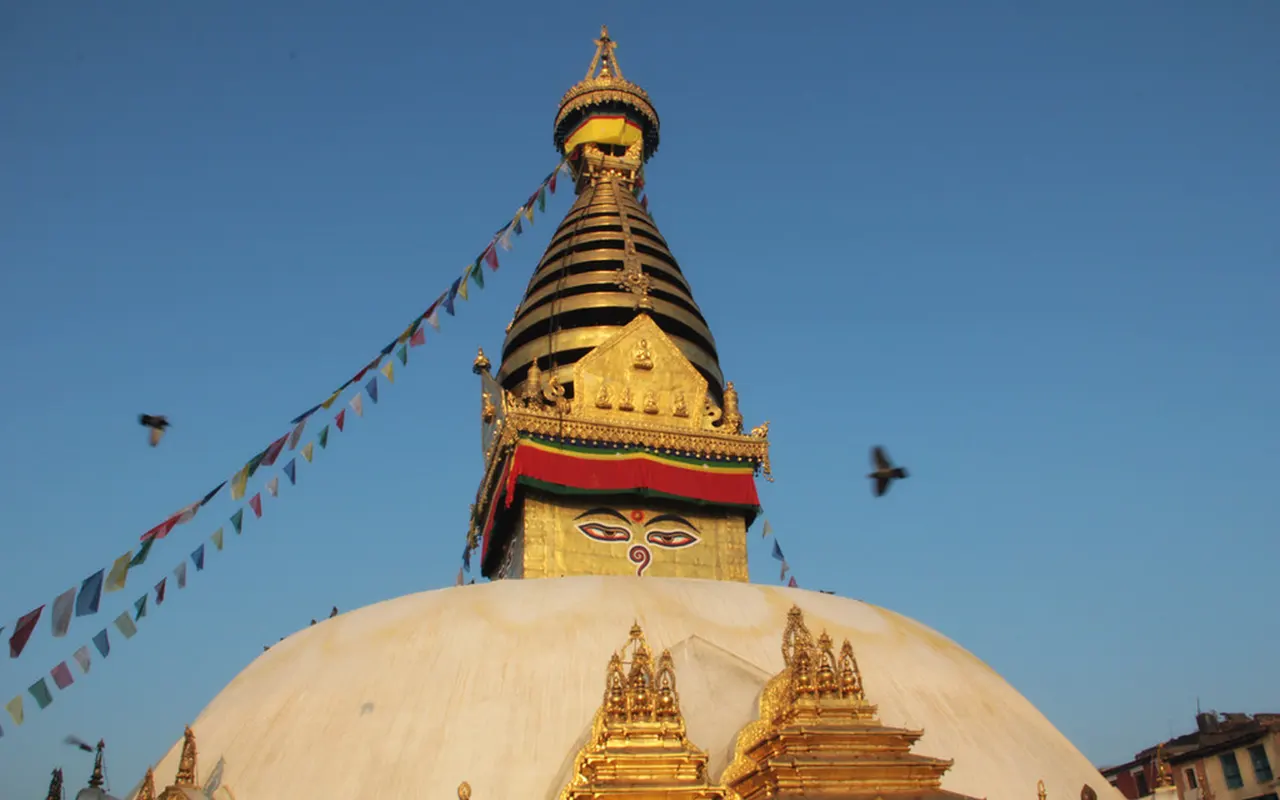
Swayambhunath is one of the oldest and most valuable Buddhist Temples of Nepal. The stupa is located on a hill west of Kathmandu and is often referred to as the Monkey Temple because of the monkeys that reside around the area.
Swayambhu translates to self-existent. Buddhist history associates the location with a lotus that bloomed on a lake that is said to have flooded the Kathmandu Valley. This is not an archaeological narrative but a religious tradition and it is an important part of the identity of the site.
The earliest written documents related to Swayambhunath are from the 5th-century AD. The stupa is believed to have been built around 460 AD and was made to be one of the major centres of Buddhist faith around the 13th century, according to the Nepal Tourism Board.
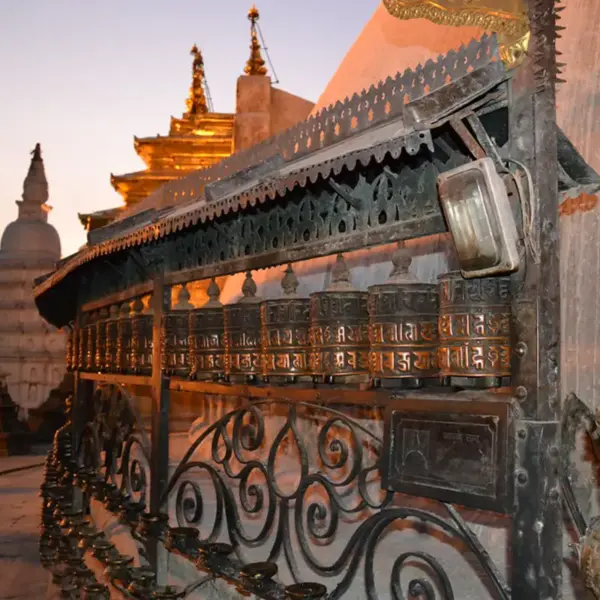
There are shrines, monasteries, prayer wheels, statues and Hindu and Buddhist religious images in the complex. It is a blend of the history of religious coexistence in the Kathmandu Valley.
Today, Swayambhunath has become part of the UNESCO World Heritage property of the Kathmandu Valley.
Recommended Trip
Nepal has a long and closely connected history with Buddhism. It is the birthplace of Siddhartha Gautama Buddha and the Buddhist tradition has flourished here along with the Hindu tradition for centuries. The country has…
 10 Days
2. Boudhanath Stupa
Boudhanath is another example of the Buddhist Temples in Kathmandu. Located east of central Kathmandu, the huge white stupa is a major centre of Tibetan and Himalayan Buddhism.
Historical and religious accounts give various accounts regarding the origin of Boudhanath. According to the Nepal Tourism Board, the stupa was believed to have been constructed around the 5th century AD in the Licchavi period, although there are other accounts regarding the founding of the stupa. It was refurbished at later times, such as during the Licchavi rule.
The stupa stands on a large mandala-shaped base. The 13 levels of the spire are rooted in the 13 stages of enlightenment and its famous Buddha eyes look in the 4 cardinal directions.
Boudhanath was also built on an ancient trade route between Kathmandu Valley and Tibet. Later Tibetan Buddhist communities were an important part of the area. People turn prayer wheels and say prayers for the Buddha around the stupa today.
Boudhanath is located in the UNESCO World Heritage Site of Kathmandu Valley.
3. Maya Devi Temple, Lumbini
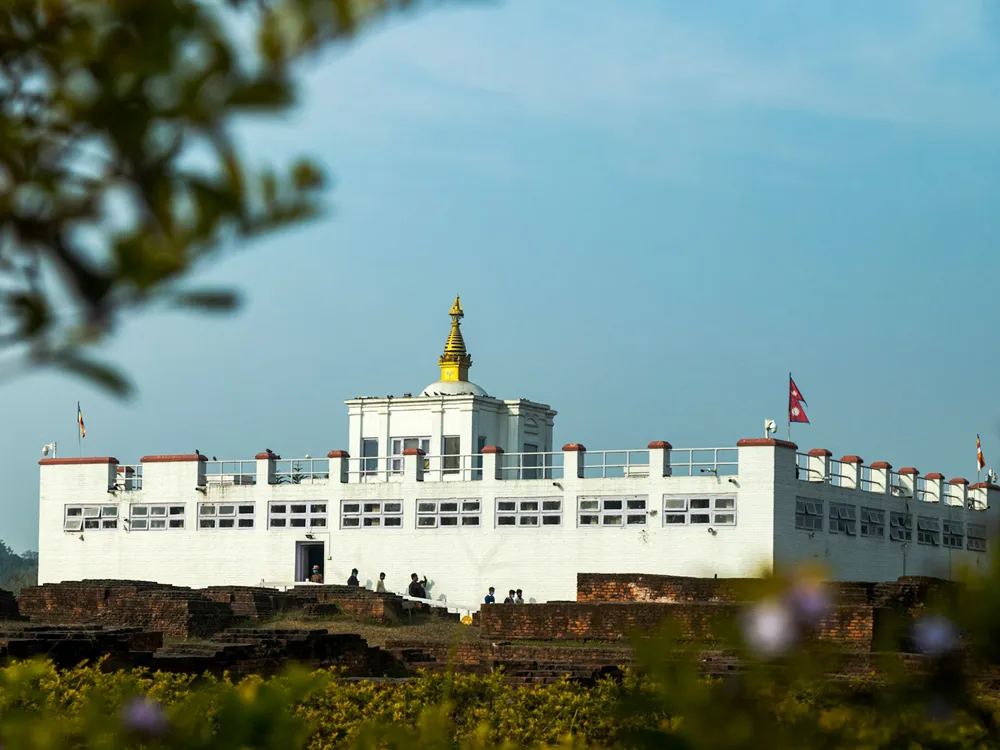
Lumbini is traditionally believed to be the birthplace of Siddhartha Gautama Buddha and its significance makes the Maya Devi Temple a special place among the Buddhist pilgrimage sites of Nepal.
According to UNESCO, Buddha appeared at Lumbini in 623 BC and at the same time Emperor Ashoka erected a commemorative pillar there in 249 BC. The Ashoka Pillar gives valuable historical information regarding the early history of Buddhist pilgrimage.
The archaeological remains of the birthplace are preserved in the Present Maya Devi Temple. Under the temple are earlier structures, including a pre-Ashokan shrine, that have been uncovered through excavations. According to UNESCO, archaeological investigations showed a series of earlier structures at the site.
There’s also a sacred pond and a marker of the traditional birthplace to look at, as well as the Ashoka Pillar. Lumbini was added to the UNESCO World Heritage List in 1997.
The history of the Maya Devi Temple is directly linked to the life of Buddha and hence, for the study of Buddhist Temples in Nepal, Maya Devi Temple holds special importance.
4. Namo Buddha
The Namo Buddha is one of the major pilgrimage sites in Kavre, which is near Panauti and Dhulikhel. It is famous for a Buddhist story of compassion and self-sacrifice.
In the Buddhist legend, an old Buddha once saw a starving tigress and her cubs. The tigress could not hunt and was near death. The Buddha gave his body to keep the tigress and her young alive. A little stupa at the place reminds us of this act of compassion.
Respecting generosity and compassion is a central value in Buddhist teaching and the story is important. It’s thus not only a religious site, but one that’s also a place where pilgrims can reflect on these principles.
Namo Buddha is now a popular tourist spot among the Buddhist pilgrimage destinations in Nepal. Accessible by road and walking from nearby towns like Dhulikhel and Panauti.
The surrounding hills, the monasteries and prayer flags give it a very different feel from the bustling streets of Kathmandu.
Recommended Trip
Nepal has a long and closely connected history with Buddhism. It is the birthplace of Siddhartha Gautama Buddha and the Buddhist tradition has flourished here along with the Hindu tradition for centuries. The country has…
5 Days
5. Hiranya Varna Mahavihar, Golden Temple
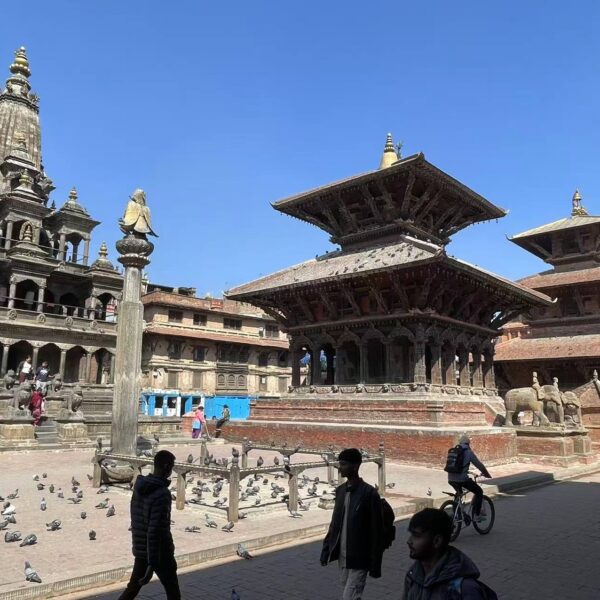
It is the Golden Temple (Hiranya Varna Mahavihar) in Patan, Lalitpur. It is one of the historic Newar Buddhist monasteries, one of the important Buddhist Temples in Nepal.
The monastery was built in the 12th century and is famous for its three-storey design, intricate wood carvings and metalwork. Golden Temple is so named because of the gilding of the metal used throughout the complex.
Kwa Bahal is the name of the monastery as well. It is constructed around a courtyard with a Buddha image in it and the surrounding buildings are built with the traditional craftsmanship of the Newar people.
The Golden Temple is an example of the courtyard-based monastery tradition of Newar Buddhist communities that developed in the Kathmandu Valley, in contrast with the large open stupa.
The site is especially valuable in terms of the Buddhist Heritage in Nepal, because the architecture provides ample evidence for the close relationship of the Buddhist religion to Newar art and urban life.
6. Mahabouddha Temple
Another important Buddhist monument of Patan is Mahabouddha Temple. The temple is of the 14th Century and is known for its terracotta architecture.
The Temple is sometimes referred to as the Temple of a Thousand Buddhas, as many images of Buddha are featured in the design. Nepal Tourism Board calls it an “outstanding Buddhist monument with thousands of images of Buddhas carved into the architecture.
The design was influenced by the architecture of Buddhist temples found at Bodh Gaya, India, the place of Buddha’s Enlightenment. The temple thus exemplifies the religious and artistic links between Nepal and India.
This will allow one to see how the Buddhist monuments were integrated into the historic urban environment while strolling through the narrow streets of Patan.
The architecture of Mahabouddha is a valuable example of the Buddhist Heritage of Nepal and, especially, its traditional Newar craftsmanship, which is enriched by religious symbolism.
7. Rudra Varna Mahavihar
Rudra Varna Mahavihar or Uku Bahal is a historic Buddhist monastery in Patan. It is situated near Mahabouddha and is a part of the city’s rich Buddhist heritage.
The monastery has several statues and religious artifacts constructed from metal, stone and wood and is related to the medieval history of Patan. According to the Nepal Tourism Board, the monastery is the site where ancient kings have been crowned.
It is enveloped in traditional buildings with gilded roof elements in its courtyard. Metalworking and sculpture also played an important role in Newar Buddhist culture, as evidenced by the collection of religious objects.
Rudra Varna Mahavihar is a somewhat more sedate Buddhist Temple than the more popular pilgrimage temples of Kathmandu and Patan for visitors.
It is also historically revealed that Buddhist monasteries were not only the houses of prayer. They could be places of art, community and significant social events.
8. Kapan Monastery
However, Kapan Monastery is a contemporary Buddhist temple in comparison with the ancient monuments of Kathmandu Valley. It sits on a hill to the north of Boudhanath and is part of the Gelug tradition of Tibetan Buddhism.
According to the Nepal Tourism Board, the monastery was built in 1970 on the property of a royal preceptor of Nepal. Later made a centre for the study and practice of Tibetan Buddhism.
The monastery is also renowned for its Buddhist teachings and courses, which are attended by students from Nepal and other countries. There is also a large statue of Tsongkhapa in the monastery.
Throughout the diverse narrative of the Buddhist Temples in Nepal, Kapan demonstrates that the history of the Buddhist temples is not confined to medieval structures. Buddhist institutions are still growing and still have a function in education, meditation and religion.
The monastery is also a regular part of the pilgrimage circuit of Buddhist temples around Kathmandu in Nepal.
9. Tengboche Monastery
Tengboche Monastery is located in the Everest region at an altitude of 3,867 m (12,687 ft). It is one of the significant Buddhist centres of the Sherpa communities of Khumbu and is situated on the popular trekking route to Everest.
The monastery was built in the 20th century. It was destroyed during the earthquake in 1934 and was reconstructed with local funds. A second fire ravaged the monastery in 1989 and it was reconstructed.
Tengboche is especially known for the festival of Mani Rimdu. The event features religious ceremonies, masks and other Buddhist rituals.
The monastery has a significant place in the Buddhist Heritage of Nepal as it demonstrates the assimilation of Tibetan Buddhist culture with Sherpa communities in the high Nepal Himalayas.
The monastery at Tengboche is a popular stop for trekkers in the Everest region, where they can learn more about the religious practices of the Khumbu people.
10. Vajrayogini Temple, Sankhu
Vajrayogini Temple is located near Sankhu on the eastern side of Kathmandu. It is a sacred place for worship by both the Buddhist and Hindu communities and is associated with the Vajrayana Buddhist traditions.
According to the Nepal Tourism Board, the present pagoda building, built in three storeys, was built in the 17th century during the reign of King Pratap Malla. The complex is surrounded by other religions and shrines.
The temple is still used at religious festivals as an important tantric Buddhist temple and Vajrayogini is still important as a deity.
Another example of the close association between the Buddhist and Hindu traditions in the Kathmandu Valley is the site. This common religious context is a recurring theme in the Buddhist Heritage of Nepal.
Sankhu is the nearest village from which one can reach the temple, which is then walked up to the shrine. The hike is a part of the pilgrimage experience.
Why These Buddhist Sites Matter
The history of Buddhist Temples in Nepal dates back to ancient pilgrimage sites related to the life of Buddha, up to contemporary Buddhist temples where Buddhist teachings are being studied.
Swayambhunath and Boudhanath demonstrate the significance of the Kathmandu Valley as a Buddhist practice centre. Lumbini is directly linked with Buddha’s life in Nepal. Patan embodies the art of Newar Buddhism and Namo Buddha is a symbol of Buddhist teachings on compassion and generosity.
In the Himalayan regions, monasteries like Tengboche show the way Tibetan Buddhism became a part of the mountain peoples’ culture. How these traditions are carried on in modern Buddhist education is brought out by Kapan.
These Buddhist pilgrimage destinations in Nepal demonstrate that there’s no single period or tradition in the Buddhist history in Nepal. It contains Theravada, Vajrayana and Tibetan Buddhist elements and centuries of interaction between the Buddhist and Hindu communities.
Recommended Trip
Nepal has a long and closely connected history with Buddhism. It is the birthplace of Siddhartha Gautama Buddha and the Buddhist tradition has flourished here along with the Hindu tradition for centuries. The country has…
9 Days
Visiting Buddhist Temples in Nepal
Visitors are reminded that these are not normal tourist sites, but active religious sites. Wear proper attire, be quiet and obey local regulations. It is common practice at stupas and other Buddhist temples to circumambulate around the temple clockwise.
Photos may be prohibited in some temples and monasteries, so please ask before taking photographs. At festivals, certain areas may be very crowded.
A local guide can also tell you the history of the area, its symbols and architectural features that might otherwise go unnoticed if you aren’t interested.
Final Thoughts
The Buddhist Temples in Nepal are a reflection of many stages in the history of Nepal. Some are linked to ancient pilgrimage practices, others to medieval Newar craftsmanship and others to contemporary Tibetan Buddhist education.
These sites provide a glimpse into the evolution of Buddhism in Nepal’s plains, cities and the Himalayas, from Buddha’s birth at Lumbini to the monastery at Tengboche.
The Buddhist pilgrimage sites in Nepal are great places to visit in order to understand its religion and history as well as its architectural and cultural aspects.
So the Buddhist Temples in Nepal are not just historic buildings. There are still many that are places of worship, study and fellowship which continue to be significant to people today, with traditions that go back hundreds of years.
Table of Contents
- Quick Summary of 10 Famous Buddhist Temples in Nepal
- 1. Swayambhunath Stupa
- 2. Boudhanath Stupa
- 3. Maya Devi Temple, Lumbini
- 4. Namo Buddha
- 5. Hiranya Varna Mahavihar, Golden Temple
- 6. Mahabouddha Temple
- 7. Rudra Varna Mahavihar
- 8. Kapan Monastery
- 9. Tengboche Monastery
- 10. Vajrayogini Temple, Sankhu
- Why These Buddhist Sites Matter
- Visiting Buddhist Temples in Nepal
- Final Thoughts