

Booking open: Secure your trip early for the seasons 2026 & 2027


Everest Base Camp Kalapathar Trek

Quick facts about Everest Base Camp Kalapathar Trek

Duration
16 Days

Trip Grade
Difficult

Maximum Altitude
5364

Group Size
2 to 25 People

Starts
Kathmandu

Ends
Kathmandu

Accomodation
Teahouse/ Hotel

Best Time
All Year


Trip Overview
Located in Nepal’s Khumbu district, the (south) Everest Base Camp Kalapathar Trek is one of the most popular destinations for nature trekking enthusiasts with an estimated 40,000 people every year. Although Mount Everest is the tallest mountain in the world, and one of the most grueling and one of the biggest achievements for experienced mountaineers; the Everest Base Camp Kalapathar Trek is far more beginner-friendly as it is a trek and not a climb. The two Everest Base Camps are in Tibet (North) and Nepal (South). Most people choose the southern Everest Base Camp as it is considered the main base and allows you to take in the stunning view of Everest and a unique adventure experience at the foot of the world’s highest mountain. Read on to get full details of the Everest Base Camp Kalapathar Trek and Itinerary details.
- Owner operated
- Price match guaranteed
- Tailored made trip
- Secured online payment

Trip Highlights
- The stunning aerial view of Phakding, Namche Bazaar, Tengboche and more as you fly from the Lukla Airport to the Everest Base Camp.
- Immersing yourself in the rich Sherpa culture in Namche bazaar and stocking up on supplies and souvenirs.
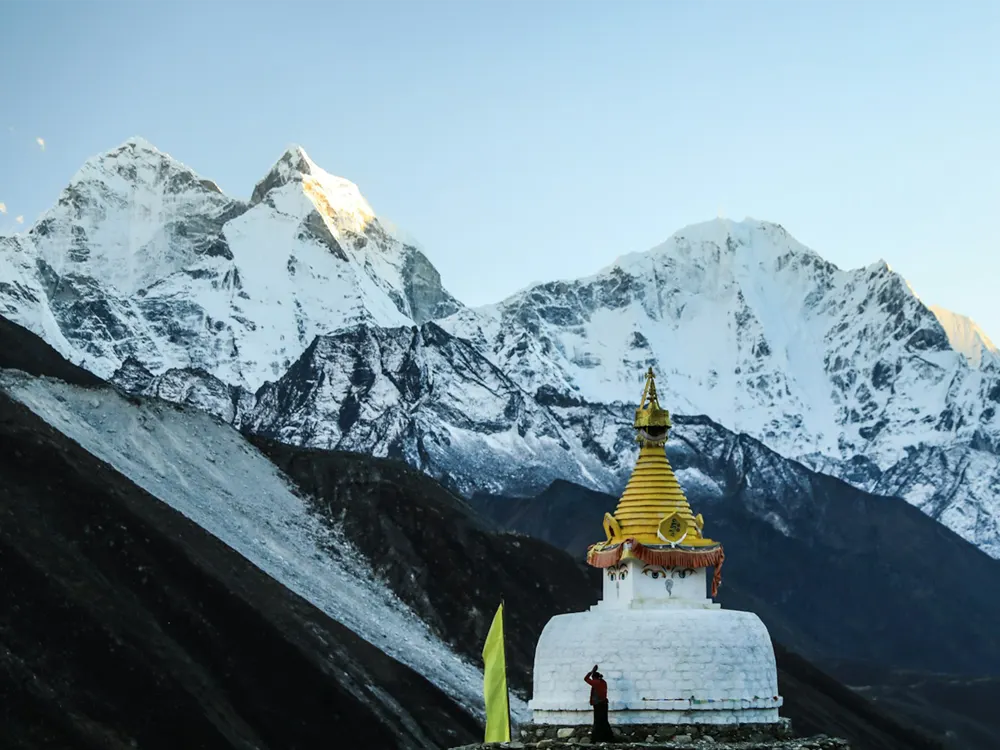
- Panoramic awe-inspiring mountain view and photo opportunities of Everest, Lhotse, Nuptse, etc. from various points along the trail.
- Trekking through the breathtaking Khumbu glacier and icefall- one of the most famous glaciers in the world.
- Touring the Sagarmatha National Park (a UNESCO world heritage site), and getting an opportunity to see endangered animals like Snow Leopard, Musk Deer, Himalayan Black Bear, Wolf, Goral, etc.
- Visiting Tengboche Monastery with a backdrop of the majestic Mount Ama Dablam- the biggest and one of the most prominent buddhist gombas (Monastery) of Khumbu.
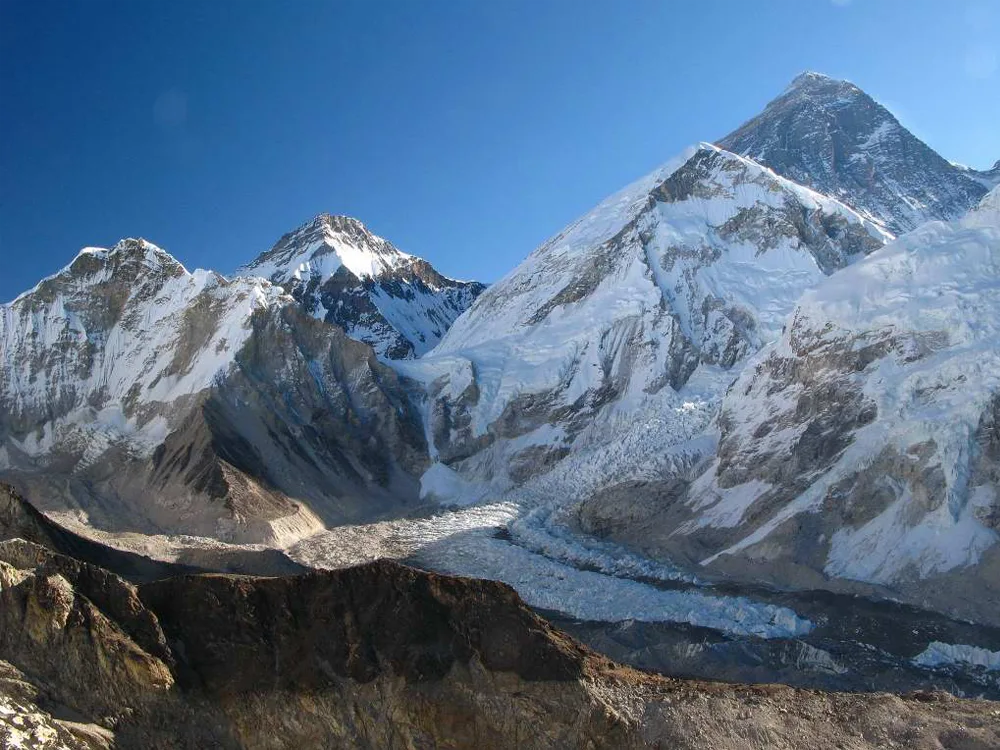
- Traversing through the Kalapatthar peak which offers one of the best vantage points with unparalleled views of the Everest massif, especially at sunrise and sunset.

Detail Itinerary
Day 01: Arrival at Kathmandu international Airport then transfer to Hotel
On day 1, as you land in Kathmandu at the Tribhuvan International Airport, you will be warmly by our representative as we get you settled into a hotel. After checking in, unpacking and freshening up, you can explore the local area, visit some historical sites, and enjoy the food and people before returning to the hotel for the night.
Lukla Flight Information
There are regular flights from Kathmandu to Lukla, however during the peak seasons (March, April, May, October, and November), the flights will be operated from Ramechhap/Manthali due to air traffic expansion. The flight from Ramechhap to Lukla takes 15 minutes.

Activity: 35 Min

Accommodation: Hotel

Meal: Welcome Dinner

Max Altitude: 1,350m/4,429ft. (Kathmandu)
Day 02: Morning flight from Kathmandu to Lukla then trek to Phakding
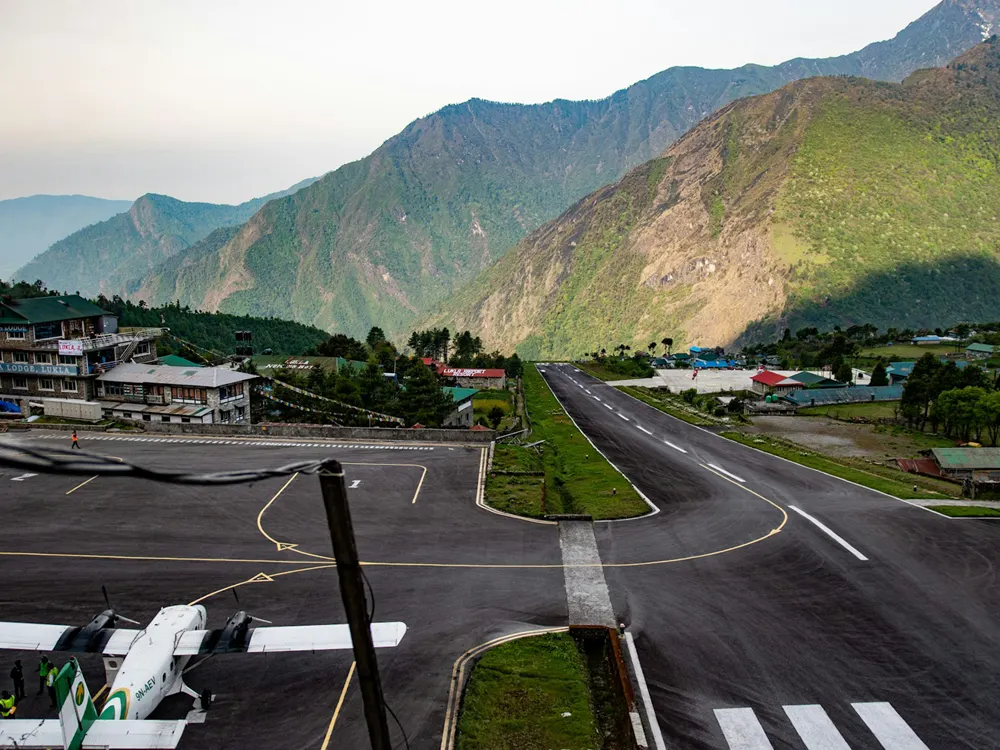
For day 2, we’ll have an exciting early-morning flight to set off towards the Everest Base Camp from Kathmandu to Lukla Airport. We will touch down at one of the most thrilling airports in the world following a 35-minute flight that offers breathtaking views of the verdant hills and the towering Himalayas.
At Namche, our group of porters and guides will welcome us, after which will trek to Phakding, which should take 4 hours. The 16-day trek to Everest Base Camp kalapathar trek starts with a mostly easy, downhill track. In roughly 2 hours, we will arrive at Thado Koshi. From here, the trail progressively climbs to Ghat before descending to Phakding.
The hike will be breathtaking, passing through an adventurous and cinematic suspension bridges with prayer flags, deep canyons, mani stones and pine trees.So get plenty of rest and stay hydrated for the trip!
Highlights: Scenic flight, first glimpse of Himalayan peaks, crossing suspension bridges over the Dudh Koshi River.
Activity: 35 Minutes flight / 4 Hours Trek
Accommodation: Lodge
Meal: Breakfast/ Lunch / Dinner
Max Altitude: 2,860m/9,383ft. (Phakding)
Day 03: Trek from Phakding to Namche Bazaar
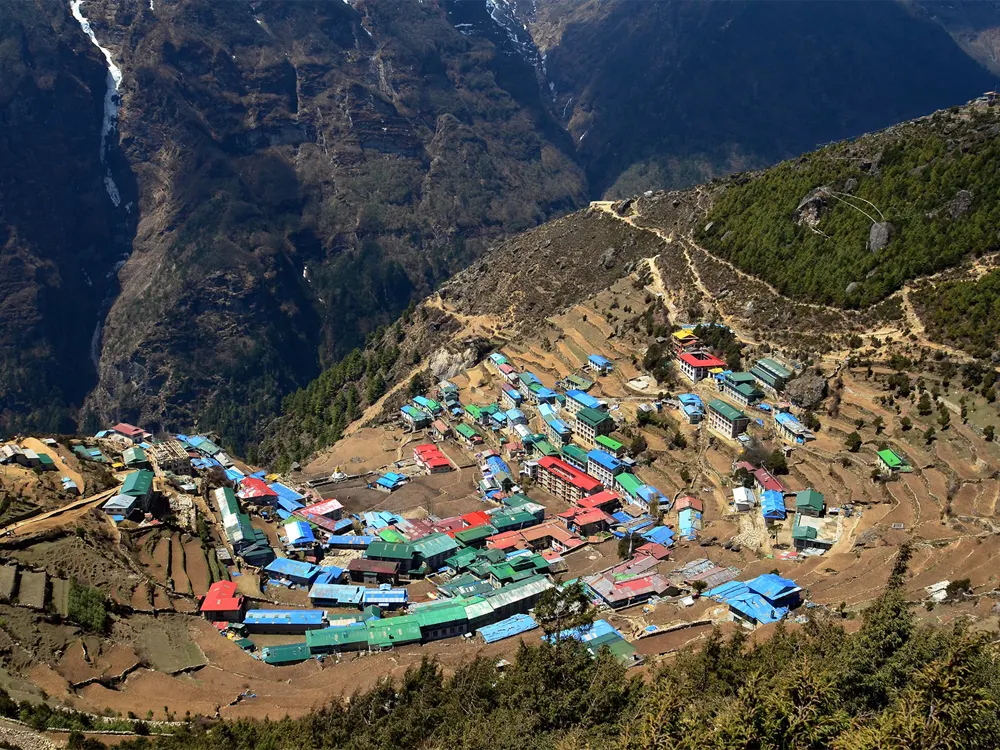
On day 3, we are going to trek from Phakding to Namche Bazar which is 3,440 meters above sea level. Initially, the route is quite flat until we pass over two suspension bridges. The trail has stairs that lead uphill after the bridges. And, we will eventually catch our first glimpse of Mount Everest around halfway up the hills, and that too from a public restroom! After traveling uphill for 30 minutes, we will reach the Sagarmatha National Park permit checkpoint. And finally, after around 15 minutes of walking, we will arrive at Namche Bazar. The Namche “Bazaar” refers to a vibrant market in the Sherpa town that is the main trading hub of Khumbu.
It is a key stop to stock up on necessities while taking in the rich daily-life and hustle-bustle environment of the Sherpas and the people who visit the Everest Base Camp. You can get supplies, souvenirs, pictures for memories, as well as a visit to the Sherpa Culture Museum.
Activity: 7 Hours Trekking
Accommodation: Lodge
Meal: Breakfast/ Lunch / Dinner
Max Altitude: 3,440m/11,286ft. (Namche Bazzar )
Day 04: Acclimatization Day in Namche Bazaar
On the fourth day of our Everest Base Camp journey, we will be spending a day in Namche. We will be trekking for a few hours and immersing ourselves in nature while building our stamina and acclimating us to the altitude. On this day, we will have to walk for a little while before being free to spend the remainder of the day as we like as we explore the Khumjung Village on our acclimatization climb.
Khumjung is a small monastery village located next to Mount Khumbila (5,761 m.) and above Namche Bazar which offers breathtaking views of the surrounding countryside and Himalayas. To find out more about the Himalayan way of life in Khumjung, we can visit Khunde Hospital, Khumjung Hilary School, and Khumjung Monastery. Once we return from our hike, we can explore one of Namche’s most tourist-favorite locations- The Liquid Bar. This location is well-known for showing a film about mountaineering at three o’clock every day.
We can pay NPR 300 for the show, or, we can get a drink and watch the movie for free. The establishment and owner are quite charming, and the place has a unique feel- to be watching a movie in the Himalayas. After the movies, you can go to a Finnish sauna and end your day in a calm state of mind and body.
Activity: Full Day Rest
Accommodation: Lodge
Meal: Breakfast/ Lunch / Dinner
Max Altitude: 3,440m/11,286ft. (Namche)
Day 05: Trek from Namche Bazaar to Tengboche
We will have an adventurous day ahead of us on our trek to the Everest Base Camp kalapathar. We’re going to walk for approximately 5 to 6 hours, with the highest elevation of the day being 3,860 meters. We’ll be wandering next to the mountains in a forest of rhododendrons, and making our way down to a stunning, flowing river with serene nature sounds. After crossing the suspension bridge, we will trek uphill before arriving at Tengboche.
The Himalayas are breathtakingly beautiful from this location. And though you are welcome to visit Tengboche monastery, please keep in mind that photography is not permitted within the monastery walls. The wonderful bakeries in Tengboche are also quite popular among hikers so don’t forget you get yourself a little post-trek treat here!
Trip Highlights: Tengboche Monastery, views of Ama Dablam, Everest, and other peaks
Activity: 5 to 6 Hours Trekking
Accommodation: Lodge
Meal: Breakfast/ Lunch / Dinner
Max Altitude: 3,860m/12,664ft. (Tengboche )
Day 06: Trek from Tengboche to Dingboche
Leaving Tengboche in the morning, we will make our way to Dingboche on our Everest Base Camp kalapathar Trek. Our trek today will span 6 hours, reaching an elevation of 4,410 m. It will be a beautiful and fairly relaxing trek to make up for the intensity a day ago. We will have a steep descent to Pangboche before gradually ascending towards Dingboche.
The valley includes exhilarating sights and captivating flora and fauna. Our path winds alongside the Ama Dablam Peak, offering us the opportunity to take in the majestic Everest massif towering above us.
Highlights: Pangboche village, views of Lhotse and Island Peak.
Activity: 6 Hours Trekking
Accommodation: Lodge
Meal: Breakfast/ Lunch / Dinner
Max Altitude: 4,410m/14,469ft. (Dingboche)
Day 07: Acclimatization Day in Dingboche and hike to Nangkar Hill then back to Dingboche
Today, we will be trekking to Nangkar Hill also known as Nangkar tshang peak. Most trekkers come here to adjust to the increasing altitude before heading higher towards Kalapatthar and more. The Nangkar Tshang peak is at an5,083m altitude and the round trip will take an approximate of 3 hours, offering breathtaking views along the way.
It’s Important to note that we might get acute mountain sickness (AMS) in this area. So hydration, rest and have enough food for a fun journey towards the Everest Base Camp kalapathar.
Highlights: Acclimatization, panoramic mountain views.
Activity: 2-3 Hours Day Hike
Accommodation: Lodge
Meal: Breakfast/ Lunch / Dinner
Max Altitude: 5,083m/16,677ft. (Nangkar Tshang Peak)
Day 08: Trek from Dingboche to Lobuche
After getting enough rest on day 7, we will be hiking for 6 hours today at an elevation of 4,910 m. The trail is comparatively flat, slowly ascending through a valley and then down to Thukla Pass. On the way, we will come across a memorial of fallen climbers marked by small stupas and stone walls. Despite being a bit of a short and steep uphill, this place is a must-see.
The view from the memorial is amazing too with mountain ranges and lots of prayer flags. It is a remote and solitary place, which adds to the determination and boosts morale for the trekkers who come to the Everest Base Camp kalapathar trek. The trail gradually ascents up to Lobuche where we will check into a mountain lodge, have dinner and rest for the night.
Highlights: Thukla Pass, memorials of climbers, views of Pumori and Nuptse.
Activity: 6-7 Hours Trekking
Accommodation: Lodge
Meal: Breakfast/ Lunch / Dinner
Max Altitude: 4,910m/16,109ft. (Lobuche)
Day 09: Trek from Lobuche via Everest Base camp to Gorakshep
Day 9 will be the most fulfilling, exhilarating and rewarding day of our entire Everest Base Camp kalapathar trek. On this day, we’ll walk 8 hours to finally reach the Everest Base Camp, which is at an elevation of 5,364 m.
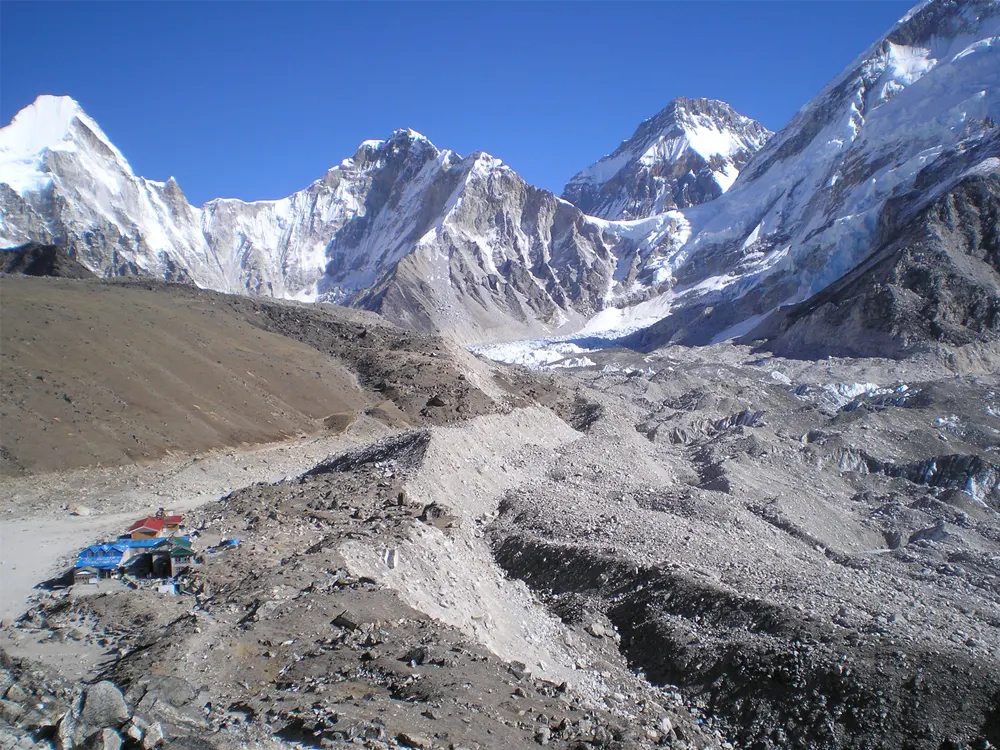
The trek Initially has a gradual ascent through the Khumbu glacier, and at the end of the trek up to Gorakshep, the trail goes through rock falls and rocky terrain. It takes about 2 hours to get to the Everest Base Camp and a little less to get back.
We can take our time to capture the memories of reaching the bottom of the world’s highest mountain. After spending some time in the base camp and enjoying the spectacular view, we will return to Gorakshep, have dinner, and rest early.
Highlights: Khumbu Glacier, Everest Base Camp, views of the Khumbu Icefall
Activity: 7-8 Hours Trekking
Accommodation: Lodge
Meal: Breakfast/ Lunch / Dinner
Max Altitude: 5,364m/17,598ft. (EBC)
Day 10: Sunrise hike to Kalapatthar then trek back to Pheriche
On day 10 of our 16-day Everest Base Camp kalapathar Trek Itinerary, we will start our day with the mesmerizing sunrise over the Himalayas at Kalapatthar (up to 5,650 m). Kalapatthar is arguably the prime spot for a grand view of Everest and other mountain ranges.
We’ll spend some time there taking photos and marveling at the scenery before taking a descending trek back towards Pheriche. We’ll spend the evening resting and relaxing with other fellow trekkers, then have a good dinner and rest for the next day ahead.
Highlights: Sunrise views of Everest, panoramic mountain views from Kalapatthar.
Activity: 7 hours Trekking
Accommodation: Lodge
Meal: Breakfast/ Lunch / Dinner
Max Altitude: 5,545m/18,192ft. (Kalapathar ( Pheriche) )
Day 11: Trek from Pheriche to Phortse
On day 11, we will be trekking from Pheriche to Phortse Thenga which is known as a hidden gem tucked away in the mountains. The landscape is one of its kind and perfect for adventurous trekkers seeking to visit this Nepali village rich is culture and History.
It is a part of the Sagarmatha National Park and secluded from the common Everest Base Camp kalapathar Trek route. We will be taking in the breathtaking view, greenery, vibrant environment and alpine woods as we trek and enjoy sight seeing.
Highlights: Trekking, Sightseeing, Mountain Climbing,
Activity: 5-6 Hours Trekking
Accommodation: Lodge/ Tea House
Meal: Breakfast/ Lunch / Dinner
Max Altitude: 3,860m/12,664ft. (Phortse)
Day 12: Trek from Phortse Thenga to Phakding via Namche Bazaar
On day 12 of the 16-day Everest Base Camp kalapathar trek, we will be trekking back down to Phakding via the Namche Bazaar with an estimated altitude of 2640m.
After reaching the river, it’s a bit of an uphill trek before we come down to Namche Bazar as we make our way to Phakding. Coming back down to Phakding’s lower altitude will be a relief. And we can rest here and even visit the bars and spas as we rest from the possible tiredness or slight altitude sickness.
Highlights: Retracing steps, easier descent, exploring the villages.
Activity: 5-6 Hours Trekking
Accommodation: Lodge
Meal: Breakfast/ Lunch / Dinner
Max Altitude: 2,640m/8,661ft. (Phakding )
Day 13: Trek from Phakding to Lukla
Day 13 will be our last day in the mountains. We’ll enjoy it take a tea break in some scenic place and then catch glimpses of Everest for one last time.
After lunch in a beautiful teahouse in Phakding, we’ll cross the same old suspension bridges passing through the forest and finally arrive at the gateway to the Everest region, Lukla and ending our Everest Base Camp kalapathar journey.
Highlights: Final day of trekking, celebration in Lukla.
Activity: 6 Hours Trekking
Accommodation: Lodge
Meal: Breakfast/ Lunch / Dinner
Max Altitude: 2,610m/8,563ft. (Lukla )
Day 14: Fly back to Kathmandu from Lukla
On day 14, we will pack all our bags and equipments and fly back to Kathmandu. We will enjoy the aerial scenery and recuperate from the adventurous and thrilling trek as we share stories, talk, and return to the Kathmandu for a relaxing paced day as our Everest Base Camp journey comes to an end.
Highlights: Scenic flight, rest, return to Kathmandu.
Activity: 35 minutes flight
Accommodation: Hotel
Meal: Breakfast
Max Altitude: 1,350m/4,429ft. (Kathmandu )
Day 15: Full day Heritage Sites Tour in Kathmandu and farewell
On day 15, we will enjoy some guided heritage sites tour of the sceneries in the Kathmandu Valley.
Highlights: Visiting heritage sites, and scenic places in the Kathmandu City.
Activity: Full day Heritage Sites Tour
Accommodation: Hotel
Meal: Breakast only
Max Altitude: 1,340m/4,396ft. (Kathmandu )
Day 16: Departure from Kathmandu
This will be our final day in Kathmandu as bid our goodbyes and you hop on a flight back home with bags full of souvenirs, camera roll full of memories, a heart full of love and thirst for adventure quenched… for now.
Activity: 30 min to airport
Accommodation: NA
Meal: NA
Max Altitude: 1,340m/4,396ft. (Kathmandu )
If our standard itinerary doesn't fully meet your needs, we are happy to tailor it to your specific preferences and requirements.

Includes and Excludes
What’s Included?
- All airport pick up and drops international and domestic.
- Complete information, about trek, flight ticket, trekking crews, and altitude sickness before the trek starting.
- First 1 night and last 2nights hotel in Kathmandu with breakfast.
- Flight ticket from Kathmandu to Lukla to Kathmandu (Round way) only 15 kg luggage allowed. (10 kg Big bag & 5 kg hand bag)
- Flight ticket from Kathmandu to Lukla to Kathmandu ( Round way) for member and involved crew members.
- Use private transportation all airport picks up and drops.
- Full board meals throughout the trek (breakfast, lunch and dinner included chosen from lodge menu)
- Twin share mountain lodge accommodation during the trek.
- As per group size experience, government licensed holder trek guide, helpful & friendly porters (1 porter =2 people) and their food, accommodation, salary, equipment, and accidental insurance for all staff. (6 trekkers 1 assistant guide)
- Down jacket and four seasonal sleeping bags will be provided during the trekking (down jacket and sleeping bag are to be returned after the trip)
- Trekking permit fee (Sagarmatha National Park entry ticket and Rural Municipality Entry Ticket)
- Himalayan idol Adventure (P) Ltd Logo’s trekking bag/duffel bag, t-shirt and Trekking trail map.
- First Aid kits for the staffs and the groups, including Oxi-meter and Diamox tablets
- Services coordination for emergency and Helicopter rescue operations
- Government taxes & Company service charge
- Farewell/ welcome dinner at Nepali culture restaurant
- Trips achievement Certificate
- Heritage sites entry tickets
What is not Included?
- Meals not included.
- Travel insurance (Compulsory)
- Nepal entry visa charge.
- All beverages and others personal expenses.
- Snacks and other personal expenses.
- Battery charge, hot showers & international phone calls.
- Service not mentioned above.
Trip Information of Everest Base Camp Kalapathar Trek
Best Seasons
Although the Everest Base Camp Kalapathar trek is accessible throughout any time of the year, spring and autumn are the best seasons to visit. In spring, (from late March to May), the day temperature remains at 25 degrees Celsius, and the night temperature drops to -15 degrees Celsius. Which is neither too hot, nor too cold. And you can enjoy the beautiful blooming flowers along your hike, and in the autumn, (from late September to November), the daytime temperature in the season will remain between 12 and 20 degrees Celsius, whereas the nighttime temperature goes below 3 degrees Celsius to -7 degrees Celsius. Spring and Autumn have the perfect weather for the trek, with clearer skies and dryness. So you can enjoy the warm sun and stunning views throughout the trek.
The winters, December to February, are the least popular season for trek because of the cold and slippery snow which can be hazardous. The temperature drops up to -4 degrees Celsius on average in Namche Bazar (which is the lowest point of the trek).And it will be tougher at higher elevations. Although it’s not impossible, it will certainly be more challenging.
If you want to do the Everest Base Camp trek during the winter season, you’ll have to bring more thermal layering, special trekking equipment to handle the snowdrifts, and probably a couple more days to complete it. The good things about trekking in the winter are that the skies are clearer, there won’t be a lot of crowds, and the expenses may be a little less due to it being an “off-season”. So if you’re on a budget and love a good challenge, you might pick the winter season for the Everest Base Camp kalapathar Trek.
Elevation & Distance
From the starting point of the trek, Lukla, the elevation is over 2,600 m. The general elevation gain during the trek will be an average of 400–800 m per day. And the maximum elevation will be 5,545m. And the starting point of the trek is at an elevation of 2,860 m (9,383 ft), whereas the base of Mount Everest is at an elevation of 5,364 m (17,598 ft.).
This makes the elevation gain for trekkers 2,504 m (8,125 ft.).The classic Everest Base Camp Kalapathar Trek from Lukla to the Base Camp is 130 km, climbing up and trekking down back. 65 km of trekking to see the base camp may seem like a lot of trekking, but it is done in 14 days to make it easier for the trekkers. At an average pace of walking for about 6-7 hours a day, you can easily cover 15 km each day. The distance of the Everest Base Camp Kalapathar trek can be easily attainable with the proper physical fitness and courage.
Difficulty & Altitude Sickness
The 16-day Everest Base Camp Kalapathar Trek is a moderate level of trekking that doesn’t require more than 8 hours of walking a day with ample time to rest and enjoy the scenery. The Everest Base Camp Kalapathar trek is just 16 days long and quite beginner friendly and requires no prior trekking expertise in technical or mountaineering skills, but the trekkers should be physically and mentally fit for the trek.
Though not very difficult, if not done with proper supervision and care, the Everest Base Camp Kalapathar Trek is not to be taken too lightly. And like any trek, it can also pose life-taking risks due to various elements like altitude sickness, accidents and mishaps, unpredictable weather conditions, rugged terrain, etc. When you are at high altitude, there is always a chance that you will get altitude sickness. So when trekking, you must understand and be prepared for the side effects of altitude sickness and what symptoms your body might show.
If your body is not used to high altitudes, you should take the trek slowly and steadily, acclimatizing yourself to the elevation. You may get the usual AMS (acute mountain sickness) due to the altitude when trekking. And it comes with mild symptoms like headaches, fatigue, dizziness, shortness of breath, nausea, insomnia, and a lack of appetite. Therefore, if you feel even a slight of these symptoms, it’s best to rest a while as you get used to the altitude you are in. Drink enough water and keep yourself cozy.
If it doesn’t lessen the symptoms even after a few days of resting and acclimatizing, then you should get down to the lower elevation and get proper medications. In case of an emergency, you should even opt for a helicopter and get back to Kathmandu for further medical care. You can take Diamox or similar medication besides acclimatization to prevent altitude sickness. Although it doesn’t cure the sickness, it reduces and prevents it to some degree.
Maximum & Minimum Walk Per Day
We will be walking an average of5-7 hours per day during the 16-day Everest Base Camp Trek. Throughout the journey, we will have ample time to rest and enjoy the scenery as we make our way to the destination. The longest trek is estimated to be on day 9 as we trek from Lobuche to Gorakshep which is a distance of around 2.8 miles or 4.5 kilometers. In general, the trekking starts at 8 a.m. and reaches the overnight stay destination by late 4 p.m., including 1 hour for a lunch break. You have to be prepared to walk for 6-8 hours a day with a daypack to trek to the Everest Base Camp Kalapathar for 16 days.
Accommodation, Foods & Drinks
The accommodations in the mountains are mostly going to be tea houses and mountain lodge or guest houses, which are run by local sherpas. Don’t get fooled by the name ‘Tea House’; there are going to be full-fledged bed and breakfast lodges, cafes, restaurants, and bakeries, specially designed to host travelers. The accommodations are going to be cozy and warm, on both a sharing basis and with single-stay options, according to your budget and preferences. The bathrooms up In the mountains are mostly European standard, with commodes, squat toilets, or a mixture of both.
There are a few hotels that have attached bathrooms, like Mountain Lodges of Nepal (Yeti Mountain Home), Hotel Everest View, and Sherpa Shangri-la Hotel, which will cost you between USD 30 and USD 250 per night. And, you can pay an additional USD 10 to upgrade from a shared room to a single room or a room with an attached bathroom if the tea house where you are staying has a room available. The one accommodation rule that you need to follow when on the Everest Base Camp Trek is that you’ll have to eat your meals (breakfast and dinner) in the same hotel or tea house you stay in. It is not appreciated if you stay at one place but eat your meals somewhere else.
The food options during the Everest Base Camp Trek will be diverse and have many options and varieties in both vegetarian and non-vegetarian options for all three meals. You can have eggs, toast, mountain bread, potatoes, pancakes, and porridge for breakfast which will give you enough energy for your journey. There will be a lot of options for lunch and dinner. You can eat soups, noodles, potatoes, spring rolls, Momo, burgers, pizza, and Dal Bhat (a Nepali dish that has rice as the main dish, comes with curry, lentils, and pickles on the side, and has free refill) for lunch and dinner. For drinks, you’ll have plenty of varieties to choose from and find hot water, tea/coffee, soft drinks, and hard drinks.
Foods and drinks are quite expensive on the Everest Base Camp trail in comparison to prices in the cities due to the cost of transport and stock facilities and demands. The general cost for one meal starts from NPR 600 to NPR 1200 (depending on what you eat), and drinks (tea, coffee, boiled water or hard drinks) are going to cost you from NPR 250 to NPR 400 per cup. To save some bucks, you can always pack some dry snacks and energy bars to fuel your treks and water purifier tablets to purify the free water you find along the trail and keep yourself hydrated throughout the Everest Base Camp Trek.
Alternative Routes
There are alternative routes to the Everest Base Camp such as the Gokyo Lake Trek estimated to be 14-20 days, the Rolwaling Valley Trek which is considered quite a lonely and difficult trail estimated to be and the Three Passes Trek which is considered to be the hardest trail and takes an estimated 20 days to complete.
Everest Base Camp Trek through Gokyo Lakes
The Everest Base Camp Trek with Gokyo Lakes is a popular alternative to the classic Everest Base Camp Trek route. It is the regular trail to the Everest Base Camp, but taking an extra tour to Gokyo Lakes on the return journey and destination.
Everest Base Camp Trek through Three Passes
It is a difficult trek in the Everest region. This trek is a combination of crossing three high passes: Kongma La Pass, Cho La Pass, and Renjo La Pass. It takes the same classic trail at first, then turns to Chukhung village from Dingboche and joins the classic trail after crossing the passes.
Everest Base Camp via Jiri
Before the Kathmandu-Lukla flights, trekkers used to drive to Jiri and then start their trek from there. It is also an alternative route but will take a longer period, but the journey from Jiri will be even more beautiful.
Rolwaling to Everest Base Camp via Tashi Lapcha
It is also another alternative to the classic Everest Base Camp trekking trail. Here, trekkers will take a bus from Kathmandu to Charikot and start their trekking. They reach the Everest Base Camp by passing the Tashi Lapcha Pass. This also takes a longer time than the classic trail.
Can Beginners Join this trip?
The Everest Base Camp kalapathar Trek is known to be pretty beginner friendly. However, it is not to be taken lightly. The average trek will be around 5-7 hours long sohigh stamina and physical as well as mental preparation is strongly recommended for the thrilling trek. The Everest Base Camp Trek will be much more gentle and enjoyable than climbing Everest as it is a trek and not mountain climbing. Beginners can enjoy the trek with the aid of trekking equipment. The trail will have some steep up-hills and down-hills but is generally safe and adventurous for the trekking enthusiasts.
Preparation & Fitness
We recommended building stamina and having good fitness before embarking on the Everest Base Camp kalapathar trek journey. Cardio, Elevation Training, Aerobics and Strength Training are the best exercises in preparation for the trek as you would need to hike and carry your bag and equipment too on the trip. We recommend getting plenty of rest, hydration and electrolytes before embarking on the journey.
It’s best to stick to light exercise a day or two before the trek so you can save energy while still being physically fit and ready for the trip. We also recommend carrying water purifying tablets, electrolyte sachets, and some medications for altitude sickness. Lastly, get your gear in good quality. It will mitigate many risks during the trek. If you train your body well and start the trek with good gear, you can complete the Everest Base Camp kalapathar Trek.
Gadget Charging & Internet
Charging of electronic devices is available at all places throughout the trail, though that could come at an extra cost. You can charge your electronics for free until Namche Bazar. After you ascend to the mountains, you’ll have to give your devices to the tea houses’ owners for charging because the personal rooms won’t have any charging ports. They’ll charge you NPR 250 to NPR 400 for full charging of phones and cameras, and NPR 500 to NPR 600 for power banks.
The Wi-Fi system in the Everest Base Camp Trek is called the Everest link. You can buy Wi-Fi cards at Everest Link Sales Stations in Kathmandu, Lukla, Namche Bazar, Dingboche, and Gokyo. You can also get the package cards at any tea house on the trail or through your trekking agents.
You’ll have to pay for the Wi-Fi, which will cost you NPR 1,999 for 10 GB of data that is valid for 30 days and NPR 2,999 for 20 GB of data with a validity of 30 days. It allows connectivity throughout the EBC region.
You can also get yourself Nepali SIM cards (NCELL) for around USD 1, but you’ll have to buy them before the trek in Kathmandu. You can also find these SIMs at Namche and Lukla, but it’ll cost you more there. The sim cards will give you good service up until Tengboche, but will not work after you cross Tengboche.
Permits
The Sagarmatha National Park covers the area of Mount Everest and the base camp. It is one of the UNESCO World Heritage Sites. This region is home to deep valleys and high mountains, glaciers, and the indigenous Sherpa community. Along with the cost of maintenance, waste management and upkeep. Since these are the treasures of Nepal that need to be preserved and protected. Which is why every trekker is required to have two permits to trek to Everest Base Camp.
The first one is the Khumbu Rural Municipality Permit. This pass provides access to the entire Khumbu region. It costs NPR 2000 per person for four weeks for foreign nationals, including SAARC nations. After four weeks, the permit cost goes up to NPR 2500 per person. A valid passport is required to obtain this permit. You can get this permit at Lukla. The other Is the Sagarmatha National Park Entry Permit. International tourists must pay NPR 3000 per person to enter and trek in the Sagarmatha National Park. The fee for SAARC nationals is NPR 1500, and for Nepalese, the entry fee is NPR 100.
You will need your passport to obtain this permit (Indian citizens can get this permit with their voter card as well). You can get this permit from the Nepal Tourism Board Office in Kathmandu or at the Sagarmatha National Park entry gate at Monjo. The easiest way to acquire any of these permits is to contact travel agencies. Give them the required documents, and they will do it for you, so you don’t have to worry about anything!
Transportation
The distance from Kathmandu to Lukla is around 138kilometres and can be reached by private vehicle, bus or plane. The motorable way is up to Thamdanda after which you’ll be starting your trek.
Private Vehicle
Hiring a private vehicle might take from $150USD to $200USD+depending on the size of your group and the type of vehicle. A jeep can accommodate 4-5 people and can cost around $150 while larger groups and vehicles will cost more.
By Bus
You can also reach Lukla from Kathmandu by road, but its worth noting that there are no direct buses to Lukla. So you can take buses up to Thamdanda and then embark on a trek. Also, going to and from EBC by road would add a couple more days to the itinerary.
A brief itinerary for the road from Kathmandu to Lukla:
Day 1: Drive from Kathmandu to Phaplu (2,485 m) (8-9 hrs.)
Day 2: Drive from Phaplu to Tham Dada (3 hours) and trek (5–6 hours) to Paiya (3,140 m).
Day 3: Trek from Paiya to Phakding (5–6 hours) (2,680 m)
The bus tickets can cost you$10-$30USD per person depending on the type of bus you take.
By Plane
There are regular flights from Kathmandu to Lukla, but during the peak seasons (March, April, May, October, and November), the flights will be operated from Ramechhap due to air traffic expansion. To reach Ramechhap, you’ll have to drive for 5 to 6 hours from Kathmandu. From there, you’ll board a 20-minute flight to Lukla, which will cost you around $176USD per person. The direct flight to Lukla from Kathmandu will be operated in January, February, June, July, August, September, and December. The duration of the flight to Lukla from Kathmandu is 35 minutes and it will cost around $217USD per person. The rates of the flights differ according to the nationality of the traveler. Another way to fly to Lukla is by helicopter. It will cost you between $350USD and $450USD, depending on the availability of the helicopter, and it takes 45 minutes to reach Lukla from Kathmandu. The price of the helicopter ride is the same for all nationals.
By Foot
If by plane, after you land in Lukla, the walk to Phakding is around 4 hours, which is 9kms. And if you chose the road route, the trek from Thamdada will be around 8 hours.
Insurance
You should not forget to acquire travel and trekking insurance. It will come in handy in case of an emergency medical evacuation in the mountains. The cost of the insurance for the Everest Base Camp trek for 15 days will be around USD 250 per person. Make sure your insurance will cover you for trekking from 3,000 meters up to 6,000 meters in altitude and include coverage for helicopter evacuation so that if you experience severe altitude sickness, you can be evacuated in the fastest way possible by helicopter.
What to Expect from the Trek?
When trekking in the high Himalayas, nothing is certain. Things can take a turn at any time, and expectations may just remain expectations. It is always better to expect some ups and downs during the trek. Do not expect flights from and to Lukla to be smooth and easy. The weather can change at any time, resulting in delays and cancellations of flights. The terrain is relatively flat with few steep ascents and descents, but there are some percentages of people who cannot reach the base camp.
The trail gradually becomes tricky and challenging as it ascends. The Sherpa people are very welcoming and hospitable but please remember to be respectful so the trip is pleasant for both you and the locals. There is a wide range of foods and accommodations on the trails of the Everest Base Camp trek. You should not be worried about a place to stay or food to eat. Some people face mild symptoms of altitude sickness due to low oxygen and air pressure. Do not force yourself, and take a step back if needed. The prices of goods and services go up as you gain altitude. Expect to pay more as you go higher.

Frequently Asked Questions
Our trip package will include
- Welcome Dinner in Kathmandu and all 3 meals (Breakfast, lunch, dinnerk whilst trekking
- All Activities and Entrance Fees as per Itinerary
- Fully Escorted Tour – Local Guide and Porters
- Return Domestic Flights Kathmandu to Lukla. Everest National Park Entry Permit
- Trekking Information Management System (TIMS) Permit
- Airport Transfers
The Nepal Government Department of National Parks and Wildlife Conservation has set a few rules in Sagarmatha National Park for the protection and conservation of the natural beauty of the region.
1.Entering the national park without a permit is illegal.
2.Don’t harm, remove, or disturb any flora and fauna.
3.Don’t leave anything else other than your footprints.
4.People should not walk within the national park at night.
5.Do not disrespect the cultural and religious sites.
6.Visitors should be self-sufficient in fuel supply (kerosene or LP gas) when they are cooking on their own.
7.Camping inside the park should be done only in the designated areas.
8.Do not throw away items such as batteries, plastic bags, and bottles.
9.Mountain bikes and motorcycles are prohibited inside the park.
10.Never trek alone; always have guides, porters, or other friends with you.
The oxygen level at Everest Base Camp is 50% lower in comparison to the sea level. The higher you go, the less oxygen is present in the air, reducing the amount of oxygen available for your body to observe.
You can find oxygen cylinders in the tea houses throughout the trekking trail, and if needed, you can use them by paying the guesthouses. However, if you feel the need for oxygen during the trek, you will have the option to buy portable oxygen cylinders (1 liter) from Lukla and Namche, which you can carry throughout the trek.
Even though you may be very strong, porters are very important on the trek to Everest Base Camp. They’ll transport the trekker’s gear, equipment, and bags.
The weight limit per person is 10–12 kg that the porter is going to carry. That leaves you to only carry a small daypack with the essentials for the day.
Though guides and porters won’t ask, they always expect tips from you at the end of the trip, as tipping culture is widely accepted in Nepal. Tipping is to pay between $50-80 for both the guide and porter if you are satisfied with their service and dedication.
This is just a guideline; you can tip your helper however you think is appropriate for helping you complete the trek.
You can take showers in the mountains but don’t expect to get hot showers every day, everywhere. You’ll have to pay extra if you want hot showers in the mountains. It’ll cost you around NPR 200–500 per shower, depending on which area you are in or what hotel you are staying in.
As the weather will be very cold in the mountains, showering daily is not recommended, as you may catch a cold and fall sick soon. So, to prevent the cold, you can always bring along body deodorizing wipes with you so that you can clean yourself without getting soaked in the water or spending extra cash.
- Owner operated
- Price match guaranteed
- Tailored made trip
- Secured online payment
 Testimonial
